

Seller Flexibility Cash Offer: What Homeowners Need to Know
TL;DR:
- A seller flexibility cash offer is a cash home sale structured around customizable closing dates, move-out timelines, and property conditions. It allows sellers to negotiate terms that fit their needs, often lowering the offer price due to added costs, but providing valuable certainty and convenience.
A seller flexibility cash offer is defined as a cash home purchase deal that gives you customizable terms on closing dates, move-out timelines, and property condition, alongside the cash payment itself. The industry standard term for this arrangement is a “flexible cash offer,” and it differs from a standard cash sale by prioritizing your schedule and circumstances, not just speed. Cash transactions close in 7–14 days compared to 42 or more days for financed sales. That speed advantage becomes even more valuable when the buyer also bends to your timeline, your move-out needs, and your property’s condition. For homeowners facing foreclosure, divorce, job relocation, or financial hardship, understanding what is seller flexibility cash offer means understanding a tool that can protect both your finances and your peace of mind.
What is a seller flexibility cash offer, exactly?
A seller flexibility cash offer is a cash purchase agreement where the buyer agrees to terms that accommodate your specific situation, not just their own profit timeline. Standard cash offers already remove financing contingencies and appraisal delays. Flexible cash offers go further by letting you negotiate the closing date, the move-out window, and whether repairs are required before closing.
The term “flexible cash offer” is the recognized industry phrase. You may also hear it called a “seller-accommodating cash deal” or simply a “flexible closing cash offer.” All three phrases describe the same core structure: cash payment, no lender involvement, and terms shaped around your needs.
Flex cash arrangements can also include funds applied toward closing costs, rate adjustments, or other purchase expenses. That structure gives sellers more ways to reduce out-of-pocket costs at the table. The result is a sale that feels less like a forced transaction and more like a negotiated exit on your terms.
What specific flexibilities do seller cash offers commonly include?
Flexible cash offers cover far more ground than most homeowners expect. The most common options include:
- Flexible closing dates. Many cash buyers accommodate closing timelines ranging from a few days to 90 days or more. That range matters if you need time to find your next home or settle an estate.
- Leaseback arrangements. A leaseback lets you receive your cash at closing and then rent the property back from the buyer for an agreed period. This is a lifeline for sellers who need funds immediately but are not ready to vacate.
- As-is purchase. Cash buyers factor repair costs into their offers and buy the property without requiring you to fix anything first. You avoid contractor delays, inspection negotiations, and repair bills entirely.
- Personal property inclusion. Buyers often agree to take furniture, appliances, or other items you do not want to move. This saves you moving costs and time.
- Probate and estate timelines. Buyers experienced with inherited properties will wait for court approvals or title clearances without pulling their offer.
Each of these options addresses a real obstacle that traditional buyers rarely accommodate. A financed buyer needs an appraisal, a lender’s approval, and a standard 30-to-45-day closing window. A flexible cash buyer removes all three barriers.
Pro Tip: Ask every cash buyer upfront whether their flexibility terms are written into the purchase agreement or just verbal commitments. Written terms protect you if the buyer tries to change conditions before closing.

How does seller flexibility affect pricing and negotiation?
Flexible terms come with a pricing trade-off, and you should understand it before signing anything. Cash offers typically range from 8% to 30% below market value, reflecting the buyer’s cost of speed and convenience. On a $400,000 home, that discount could mean $32,000 to $120,000 less than a traditional sale.
That range is wide because not all cash buyers price the same way. The discount depends on repair costs the buyer assumes, the local market, and how much flexibility you request. A leaseback of 60 days costs the buyer carrying costs and delayed resale. That cost shows up in a lower offer price.
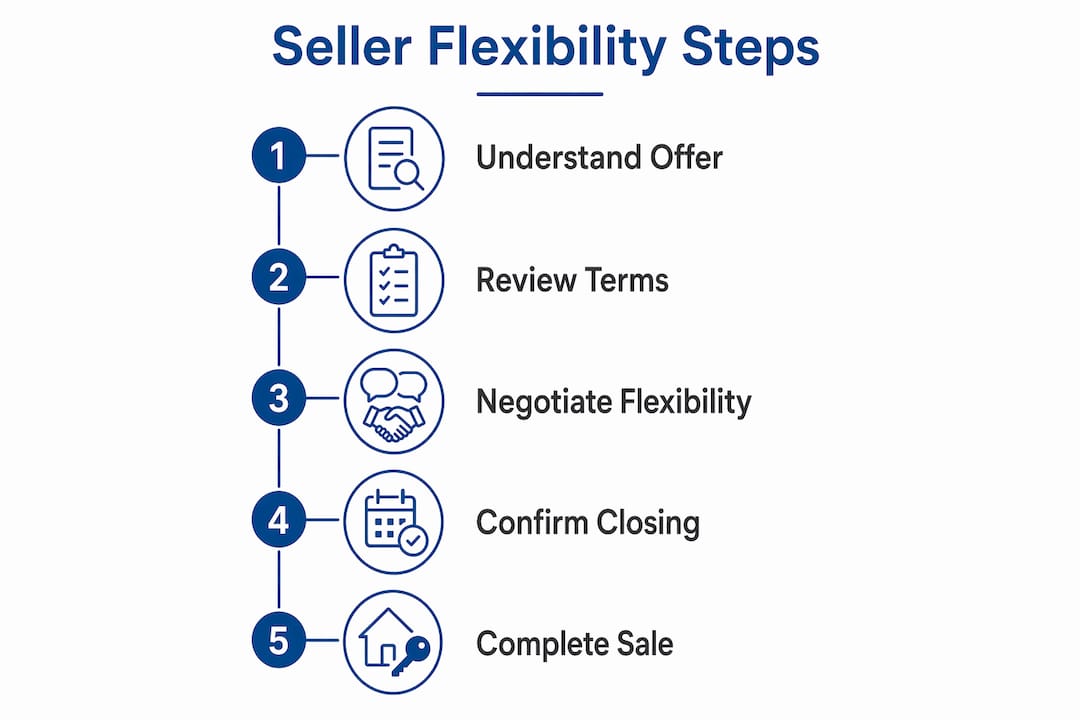
Here is how to think about negotiation in a flexible cash deal:
- Get at least 2–3 cash offers. Comparing multiple bids gives you real data on what the market will pay and reveals which buyers are padding their discount.
- Separate price from terms. A buyer offering $15,000 less but accepting a 60-day leaseback may net you more than a higher offer that forces you into a hotel for a month.
- Counter repair assumptions with vendor quotes. If a buyer discounts for a roof repair, get a contractor estimate. A $5,000 quote beats a $20,000 assumed discount.
- Offer preferred title company access. Allowing buyers to use their preferred title company can speed up closing and earn you concessions on timeline or price.
- Know your walk-away number. Calculate your net proceeds after moving costs, carrying costs, and any remaining mortgage. That number is your floor, not the offer price.
The renovation costs versus cash offer calculation is often more favorable to cash sales than sellers initially assume. Repair bills, agent commissions, and months of carrying costs add up fast on a traditional listing.
Pro Tip: When a buyer quotes a repair discount, ask them to itemize it. Vague repair deductions are the most common way cash buyers inflate their discount beyond what the property actually needs.
What are the benefits of a flexible cash offer for urgent sellers?
The core benefit of a flexible cash offer is certainty. Traditional sales fall through when financing fails, appraisals come in low, or buyers get cold feet. Cash transactions remove financing contingencies, which is the single largest cause of deal collapse in conventional real estate.
For homeowners in urgent or complex situations, the advantages stack up quickly:
- Speed when you need it. Closing in 7–14 days stops a foreclosure, satisfies a divorce settlement, or funds a medical expense without waiting for a buyer’s mortgage approval.
- Extended timeline when you need that instead. The same buyer who can close in a week can often push to 60 or 90 days if you need time to relocate.
- No showings, no staging. You do not clean, repair, or vacate for open houses. The buyer sees the property once and makes an offer.
- Simplified paperwork. Without a lender involved, the transaction documents are shorter and the closing process is faster.
- Control over your move-out date. A leaseback or extended closing gives you a firm date to plan around, which reduces stress significantly.
“Flexibility in cash offers can be worth far more than a few thousand dollars when you factor in personal needs like moving timelines and avoiding repairs. Sellers gain peace of mind and control when buyers accommodate their schedules rather than forcing them into a standard 30-day window.”
Cash buyers view flexibility as a competitive advantage, not a burden. The best buyers in this space have built their entire service model around accommodating sellers in difficult situations. That means you have real negotiating power when you communicate your needs clearly.
For sellers who need extra time before vacating, understanding how cash buyers accommodate timelines is worth reading before you accept any offer.
How to evaluate and negotiate seller flexibility cash offers effectively
Evaluating a flexible cash offer requires more than reading the price on the first page. The terms buried in the agreement often matter more than the number at the top.
- Gather at least 2–3 offers before deciding. Multiple cash bids give you leverage and a realistic picture of what your property is worth in the current market. One offer gives you no comparison point.
- Ask specific questions about flexibility. Find out exactly how many days the buyer will allow for closing, whether a leaseback is available, and what happens if you need an extension. Vague answers are a red flag.
- Get all flexible terms in writing. Verbal agreements on move-out dates or leaseback periods are unenforceable. Every term you negotiate must appear in the signed purchase agreement.
- Calculate your true net proceeds. Subtract moving costs, any remaining mortgage balance, and any fees the buyer charges. Compare that number across all offers, not just the headline price.
- Know when to counter and when to walk. If a buyer refuses to put leaseback terms in writing or keeps adjusting the price after the agreement is signed, walk away. Reputable buyers lock in terms and honor them.
Making an offer on a house works both ways. Understanding how buyers think about offers helps you respond to their terms with confidence rather than accepting the first number you see.
Pro Tip: Before signing, ask the buyer for references from sellers who used a leaseback or extended closing. A buyer with real experience in flexible arrangements will have past clients willing to speak about the process.
Key Takeaways
A seller flexibility cash offer delivers the most value when you treat the terms, not just the price, as negotiable assets in your sale.
| Point | Details |
|---|---|
| Core definition | A flexible cash offer is a cash purchase with customizable closing dates, move-out timelines, and as-is condition acceptance. |
| Pricing trade-off | Cash offers typically run 8%–30% below market value; flexible terms may add to that discount but often offset real costs like repairs and carrying expenses. |
| Leaseback option | Sellers can receive cash at closing and rent back temporarily, giving them funds and time to prepare their next move. |
| Negotiation strategy | Gathering 2–3 competing cash offers creates leverage and reveals which buyers are padding their discount beyond actual repair costs. |
| Written terms are non-negotiable | Every flexible term, including move-out dates and leaseback periods, must appear in the signed purchase agreement to be enforceable. |
Why flexibility often matters more than the final number
After working in real estate for years, the pattern I see most often is this: sellers fixate on the offer price and overlook the terms that actually determine how stressful or smooth the sale turns out to be.
A seller who accepts a higher offer from a traditional buyer and then spends three months on repairs, showings, and a delayed closing often ends up with less money and far more stress than the seller who took a slightly lower flexible cash offer and moved on their own schedule. The math rarely favors the traditional route once you account for carrying costs, agent commissions, and the emotional cost of uncertainty.
The sellers who get the best outcomes from flexible cash deals are the ones who communicate their needs directly and early. Sellers should tell buyers exactly what they need, because reputable cash buyers treat flexibility as a core part of their service, not a reluctant concession. If a buyer pushes back hard on every flexible term you request, that tells you something important about how they will behave after you sign.
My honest advice: treat flexibility as an asset you bring to the negotiation. You are offering the buyer certainty of sale, no financing risk, and an as-is property. That has real value. Use it to get the terms that protect your timeline and your next chapter.
— Real Estate Team
Sell Dave Your House: flexible cash offers built around your timeline
Homeowners in Detroit who need to sell quickly without sacrificing fairness have a direct option with Sell Dave Your House.

Sell Dave Your House delivers fair cash offers in Detroit within 24 hours and can close in as little as seven days. If you need more time, the team works around your schedule, not theirs. There are no repairs required, no agent commissions, and no hidden fees. With over 16 years of experience helping homeowners through foreclosure, financial hardship, and major life transitions, Sell Dave Your House has built its process around the flexibility sellers actually need. If you are ready to see what your home is worth, explore your selling options and request a no-obligation cash offer today.
FAQ
What is a seller flexibility cash offer?
A seller flexibility cash offer is a cash home purchase deal that lets you customize closing dates, move-out timelines, and property condition terms to fit your situation. It removes financing contingencies while giving you control over how and when the sale completes.
How fast can a flexible cash offer close?
Cash transactions typically close in 7–14 days, though flexible buyers can extend that window to 60 or 90 days if you need more time to relocate or settle an estate.
Will asking for flexibility lower my cash offer price?
Flexible terms like leasebacks or extended closings do add costs for the buyer, which can reduce the offer price. However, cash offers already range 8%–30% below market value, and the savings from skipping repairs, commissions, and carrying costs often offset that gap.
What is a leaseback in a cash home sale?
A leaseback lets you receive your cash payment at closing and then rent the property back from the buyer for an agreed period. Leaseback arrangements give sellers funds immediately while providing time to prepare for their next move.
How do I negotiate better terms on a flexible cash offer?
Gather at least 2–3 competing cash offers to create leverage, then counter repair assumptions with real vendor quotes. Get every flexible term in writing before signing the purchase agreement.