

Why Cash Buyers Skip Inspections: A Clear Guide
TL;DR:
- Cash buyers waive inspections mainly to make their offers more competitive and close deals faster in hot markets. While waiving contingencies speeds up closing and reduces negotiation friction, skipping formal inspections can lead to significant unforeseen repair costs, sometimes exceeding $25,000. Savvy buyers conduct informational inspections beforehand to gain knowledge without sacrificing their chance to renegotiate based on findings.
Cash buyers skip inspections primarily to make their offers more competitive and close deals faster in tight real estate markets. No U.S. state law requires a home inspection for any real estate purchase, which means cash buyers can legally waive inspection contingencies without breaking any rules. This waiver is a strategic move, not a sign that the property is problem-free or that due diligence doesn’t matter. Understanding why cash buyers skip inspections helps you make smarter decisions, whether you’re buying, selling, or simply trying to close quickly without unnecessary complications.
Why cash buyers skip inspections to win deals
Waiving an inspection contingency is one of the most effective tools a cash buyer has in a competitive market. Sellers prefer offers with fewer conditions because fewer conditions mean fewer chances for a deal to fall apart. A buyer who removes the inspection contingency signals confidence and commitment, which makes their offer stand out even when it isn’t the highest price on the table.

The speed advantage is significant. Cash offers close in 7–14 days, compared to 30–60 days for financed offers. That timeline compression happens partly because there’s no lender requiring an appraisal or mandating an inspection before releasing funds. When you remove those steps, the path from accepted offer to closing becomes much shorter.
Waiving the inspection contingency also removes a common negotiation flashpoint. In a traditional sale, inspection findings often trigger requests for repairs or price reductions. Sellers in hot markets don’t want that friction. By waiving the contingency, a cash buyer tells the seller: “What you see is what I’m paying for.” That message resonates strongly in a seller’s market.
Here’s how the process typically works for a cash buyer who waives the inspection contingency:
- Submit a clean offer. The offer includes no inspection contingency, which immediately signals strength to the seller.
- Agree on a short closing window. Cash buyers often propose a 7–14 day close, which sellers find attractive.
- Conduct any informal review quickly. Some buyers do a walkthrough or hire an inspector for informational purposes only, with no contractual right to renegotiate.
- Proceed directly to title and closing. Without lender requirements, the process moves straight to title search, escrow, and closing.
Pro Tip: Request an informational inspection before submitting your offer. You get the knowledge without adding a contingency to your contract. This keeps your offer clean while reducing your personal risk.
What are the real risks of bypassing inspections?
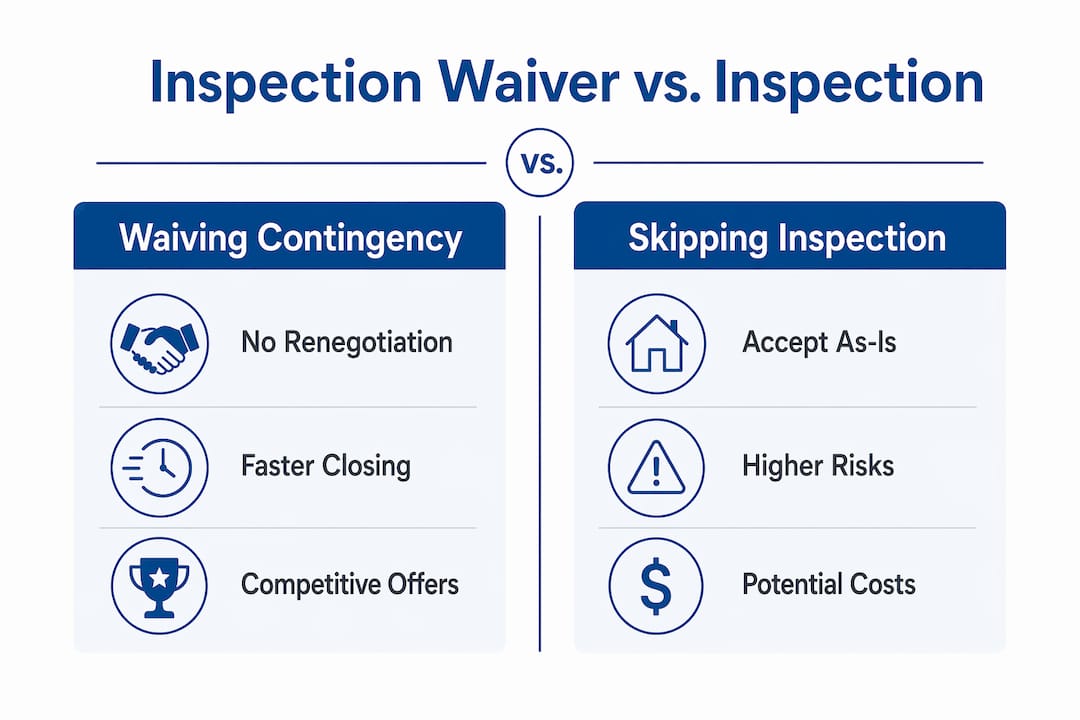
Skipping a formal inspection contingency carries real financial exposure. A professional home inspection costs $300–$700 and covers the roof, foundation, HVAC system, and electrical in 1–2 hours. Skipping that step can lead to $5,000 to $25,000 or more in unexpected repairs within the first year after purchase. That’s a significant gap between the cost of knowledge and the cost of ignorance.
The problems inspections most commonly uncover include:
- Foundation issues. Cracks, settling, or water intrusion that can cost tens of thousands of dollars to repair.
- Mold and moisture damage. Often hidden behind walls or under flooring, mold remediation can run $3,000–$10,000 or more.
- Outdated or faulty wiring. Older homes may have aluminum wiring or knob-and-tube systems that create fire hazards and insurance complications.
- Roof deterioration. A roof replacement typically costs $8,000–$20,000 depending on size and material.
- HVAC failure. Heating and cooling systems near end of life can fail within months of purchase.
Buying a property as-is means you accept the home in its current condition. You waive your contractual right to ask the seller for repairs or a price reduction based on what an inspection reveals. That’s a meaningful protection to give up, and you should go in with your eyes open about what you’re accepting.
Removing the lender from the equation eliminates appraisal and inspection mandates, but it also removes a layer of protection that lenders build in for their own benefit. Cash buyers take on more risk in exchange for more speed and control. Without a lender, you must also arrange your own owner’s title insurance, which protect against unknown claims not found in the title search. Many cash buyers skip this too, compounding their exposure.
The misconception that paying cash removes the need for an inspection is widespread. Paying cash changes your financing, not the condition of the property. The roof doesn’t care how you paid for the house.
How do savvy cash buyers reduce risk without losing their edge?
Experienced cash buyers rarely skip due diligence entirely. They separate two things that many buyers confuse: waiving the inspection contingency and skipping the inspection altogether. These are not the same thing.
Waiving the contingency vs. skipping the inspection
Waiving the inspection contingency means you have no contractual right to renegotiate or walk away based on inspection findings. Skipping the inspection entirely means you have no information at all. The first is a competitive strategy. The second is a gamble.
| Approach | Contingency in contract | Information gathered | Renegotiation rights |
|---|---|---|---|
| Traditional inspection | Yes | Full report | Yes, based on findings |
| Informational inspection | No | Full report | No contractual right |
| Pre-offer inspection | No | Full report | Priced into your offer |
| No inspection at all | No | None | None |
Savvy cash buyers use informational inspections conducted before or immediately after submitting an offer. The inspector’s findings inform the buyer’s decision, but the contract contains no contingency clause. This approach keeps the offer clean and competitive while giving the buyer real knowledge about what they’re purchasing.
Another approach is the limited inspection window with a threshold. The buyer agrees to a short inspection period, typically three to five days, and commits to only renegotiating if a single defect exceeds a defined dollar threshold, such as $10,000. This reassures the seller that the buyer won’t nickel-and-dime them over minor issues while still protecting the buyer from catastrophic surprises.
Pre-offer inspections work especially well in markets where sellers list homes for a short window. You pay for an inspection before your offer is even accepted, which means you can submit a no-contingency offer with full knowledge of the property’s condition. That knowledge lets you price your offer accurately and avoid post-closing regret.
Pro Tip: When negotiating a limited inspection window, specify a clear dollar threshold in writing. Something like “buyer will only request renegotiation for defects exceeding $15,000” removes ambiguity and builds seller confidence in your offer.
Understanding as-is property sales is critical before you commit to any of these strategies. Knowing exactly what you’re agreeing to protects you from surprises that could have been avoided.
What legal protections remain when inspections are waived?
Waiving an inspection contingency does not eliminate all legal protections for buyers. Sellers remain legally liable for known defects they actively conceal or misrepresent, regardless of what the contract says. An “as-is” clause does not protect sellers or their brokers from fraud or concealment claims.
Key legal points every cash buyer should understand:
- Seller disclosure statements are legally binding. Most states require sellers to disclose known material defects. Signing a false disclosure statement creates legal liability for the seller.
- Brokers must disclose visible red flags. A seller’s broker who notices a significant defect and says nothing can face liability alongside the seller.
- Inspection waivers shift risk but don’t eliminate liability. If a seller knew about a foundation problem and hid it, a buyer can still pursue legal remedies after closing.
- Post-closing claims are expensive and uncertain. Litigation over concealed defects can take years and cost more than the repair itself. An inspection is far cheaper than a lawsuit.
Brokers must document disclosures carefully and note when a buyer has chosen to waive an inspection. This protects the broker from later claims that they discouraged due diligence. If you’re a buyer waiving an inspection, ask your agent to document that the decision was yours and that you understood the risks.
Consulting a real estate attorney before waiving an inspection is a practical step, not an overreaction. A one-hour legal consultation costs far less than discovering a hidden defect after closing with no contractual recourse. The legal framework around cash sales and inspection waivers varies by state, so local expertise matters.
Key Takeaways
Cash buyers skip inspections as a competitive strategy, not because the property is problem-free, and the smartest buyers use informational inspections to stay informed without adding contingencies.
| Point | Details |
|---|---|
| Inspection waivers are strategic | Waiving contingencies speeds closings and strengthens offers in competitive markets. |
| Financial risk is real | Skipping inspections can lead to $5,000–$25,000 or more in surprise repair costs. |
| Informational inspections balance both | Buyers can hire inspectors without adding a contingency clause to their contract. |
| Legal protections still exist | Sellers remain liable for known defects they conceal, even in as-is cash sales. |
| Documentation matters | Buyers should have their agent document the waiver decision to protect all parties. |
What I’ve learned from watching cash buyers skip inspections
I’ve seen cash buyers walk away from closings feeling invincible, only to call back three months later with a $20,000 foundation problem they never saw coming. The speed of a cash deal is real and valuable. The risk of skipping due diligence is equally real.
The buyers who handle this best are the ones who treat the inspection as a tool for pricing, not just a contingency for negotiation. They get the inspection done before they submit their offer, price their bid accordingly, and close with confidence. They’re not gambling. They’re making an informed decision with full knowledge of what they’re buying.
What I find most interesting is how the market has shifted buyer behavior. In a hot seller’s market, waiving the contingency feels necessary. But the buyers who do it without any inspection at all are taking a risk that the market doesn’t require them to take. You can avoid costly surprises without slowing your offer down. You just have to know the difference between waiving a contingency and abandoning your due diligence entirely.
My honest advice: never skip the inspection entirely. Waive the contingency if the market demands it. But pay for the information. That $500 inspection report is the cheapest insurance you’ll ever buy on a six-figure purchase.
— Real Estate Team
Selling your Detroit home fast with Sell Dave Your House
If you’re on the selling side of a cash transaction, understanding how cash buyers think about inspections helps you price and position your home more effectively.

Sell Dave Your House has spent over 16 years working with Detroit homeowners who need to sell their house fast without the delays of traditional listings. The process is straightforward: you receive a fair all-cash offer within 24 hours, and closing can happen in as little as seven days. There are no repair requirements, no agent commissions, and no inspection contingencies to derail the deal. If you’re ready to move quickly, get a cash offer today and see exactly what your home is worth without the wait.
FAQ
Why do cash buyers skip inspections?
Cash buyers waive inspection contingencies to make their offers more attractive to sellers and close faster. No U.S. state law requires a home inspection, so waiving it is a legal and common competitive strategy.
Does skipping an inspection mean no inspection at all?
Not always. Many cash buyers conduct informational inspections without adding a contingency to their contract. This gives them full knowledge of the property’s condition while keeping their offer clean and competitive.
What are the financial risks of bypassing inspections?
A professional inspection costs $300–$700, but skipping it can result in $5,000–$25,000 or more in unexpected repairs within the first year. Foundation issues, mold, and faulty wiring are among the most costly problems inspections typically catch.
Can a seller hide defects in a cash sale with no inspection?
No. Sellers remain legally liable for known defects they conceal or misrepresent, even in as-is cash sales. An inspection waiver shifts risk to the buyer but does not protect a seller who commits fraud or concealment.
What is an informational inspection in a cash sale?
An informational inspection is a standard home inspection conducted without a contingency clause in the purchase contract. The buyer receives the full inspection report but has no contractual right to renegotiate based on the findings.