

Counteroffer Meaning in a Home Sale: What It Is and What to Do
A counteroffer is a response to an offer on a house that changes the terms instead of accepting them. It can change the price, the closing date, the repairs, the deposit or other conditions, and it ends the original offer the moment it is made. If you are selling a house in Metro Detroit that needs work, every extra round of counters is more time carrying the property. A direct, as-is cash offer with no repairs, showings or agent commissions leaves far less to negotiate, and that is why many sellers choose it.
TL;DR
- A counteroffer is a new offer, not an amendment. It rejects the offer in front of it and replaces it with different terms.
- Once a counteroffer is made, the original offer is off the table and generally cannot be accepted later.
- Price is only one thing a counter can change. Closing date, repairs, credits, deposit and contingencies are just as common.
- No contract exists until one side accepts the other side’s latest terms in writing.
- The fewer conditions an offer carries, the fewer counters you face. As-is cash offers carry very few.
Table of Contents
- What a counteroffer means in a home sale
- What a counteroffer can change
- What happens to the original offer
- How a counteroffer becomes a contract
- Counteroffers and deadlines
- What to check before you respond
- Repairs: the counter that drags sales out
- Why traditional sales produce so many counters
- When a cash offer leaves little to counter
- Our offer for Metro Detroit sellers
- Our perspective on counteroffers
- FAQ
- Sources
What a counteroffer means in a home sale
When a buyer sends an offer, the seller has three choices: accept it, reject it, or answer with different terms. That third choice is the counteroffer. It works the other way too: when a seller counters, the buyer can accept, walk away, or counter back.
Legally, a counteroffer does two things at once. Cornell Law School’s legal encyclopedia explains that it acts as a rejection of the original offer and as a new offer with materially different terms. The common-law rule behind this is sometimes called the mirror-image rule: an acceptance has to match the offer exactly. If a reply says “I accept, but with a different closing date,” it is not an acceptance. It is a counteroffer.
That is also the answer to the question “what does it mean when someone counters my offer?” The North Carolina Real Estate Commission puts it plainly in its offer and acceptance guide: the other side has changed your terms, so your original offer is rejected, and you may accept the new terms, reject them without a reply, or reject them and counter. The back and forth can continue until one side accepts the other’s latest version. Contract law varies by state, but the principle is the same across the country.
What a counteroffer can change
Most people think of price, but a counteroffer can touch any term in the purchase agreement. Common ones include:
| Term | What a counter might ask for |
|---|---|
| Purchase price | A higher or lower number |
| Closing date | Earlier, later, or a set date |
| Earnest money | A larger good-faith deposit (the money a buyer puts down to show commitment) |
| Contingencies | Removing or shortening inspection, financing, appraisal or home-sale conditions |
| Repairs or credits | Who fixes what, or a cash credit instead |
| Included items | Appliances, furniture, other personal property |
| Closing costs | Who pays which fees |
| Possession | When the buyer gets the keys |
These categories are consistent across guides on what counteroffers can change, which also note there is no limit to how many counteroffers can be exchanged. A contingency is a condition that lets a buyer back out without penalty, for example if the house fails an inspection or the loan falls through.
A counter can also be quite narrow. A well-written one says which terms are accepted, rejected or replaced, and states that all remaining terms of the original offer stay the same, as one Oregon real estate attorney recommends.
What happens to the original offer
This is the part that surprises people. Once a counteroffer goes out, the first offer is gone. NAR’s consumer guide says sending a counteroffer voids the original offer, so the seller cannot go back and accept it.
Michigan REALTORS’ counteroffer refresher spells out what that means in practice for Michigan sellers:
- A counteroffer is treated as a rejection of the offer and becomes an offer itself.
- If the buyer turns the counter down, you cannot revive and accept the buyer’s original offer.
- If you have two or more counteroffers outstanding at once, you risk both being accepted and owing the house to two buyers.
The practical lesson: do not counter casually. If the buyer’s first number was the best you will see, countering for a little more can cost you the sale.
A worked example
Say a buyer offers $185,000 for your Warren house, with a 30-day closing and an inspection contingency. You counter at $195,000. At that moment the $185,000 offer no longer exists. The buyer may accept $195,000, reject it and leave, or counter at $190,000 with a 45-day closing. If the buyer walks, you cannot call back and say yes to $185,000. (This is an illustration, not a market figure.)

How a counteroffer becomes a contract
A home-sale contract exists only when one party accepts all the terms of the latest offer or counteroffer, in writing, with a signature, within the time allowed. Nolo’s overview of the offer-to-contract timeline explains that both signatures show mutual agreement. A buyer who later backs out for a reason the contract does not cover can lose the earnest money.
Until then, nobody is bound. Michigan REALTORS notes that generally an offer can be revoked any time before it is accepted, and the revocation does not need to be in writing. Even a stated expiration date does not always stop that without payment or other consideration. Michigan sellers should read that as: a deal is not a deal until both signatures are on the final version.
Counteroffers and deadlines
Offers usually come with an expiration time, and counters often carry their own. The wording matters. Oregon REALTORS explains that a counter using language like “all other terms stay the same” may absorb the original deadline, while a specifically stated new deadline controls. Forms differ by state, so read the deadline line on whatever you are given, and ask what time zone and delivery method count.
What to check before you respond
Whether you are answering a counter or sending one, run through this list:
- Read every changed term, not only the price. A higher price with a shorter inspection window or a larger repair credit can be a worse deal.
- Know the deadline. If you miss it, the offer may lapse.
- Add up the real cost. Credits, closing costs, repairs and carrying costs (taxes, utilities, insurance on the house while it sits) all come out of what you keep.
- Ask whether the timelines are realistic. A buyer who promises a fast closing but needs a mortgage still has to get through underwriting and an appraisal.
- Check which contingencies remain. Each one is a way the deal can still fall apart.
- Put it in writing and have the full contract reviewed. The North Carolina Real Estate Commission stresses reading the entire purchase contract and consulting an attorney before you sign anything binding. In Michigan, a real estate attorney is the right person for contract questions.
Repairs: the counter that drags sales out
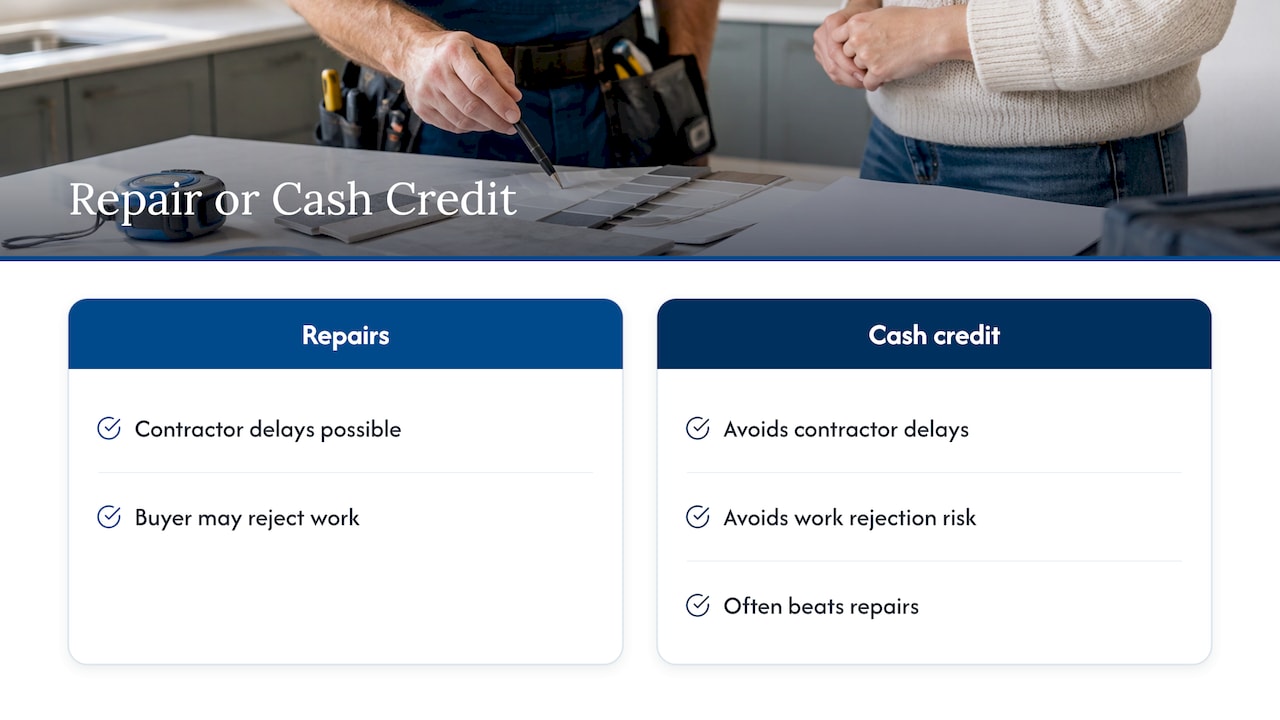
For a house that needs work, repairs and credits are where most counters happen. A buyer inspects, sends a list, and you answer with a counter. A seller can respond item by item in writing: repair, credit, or decline, with a firm deadline, as this seller negotiation guide describes. It also notes that a cash credit often beats doing the repairs, because it avoids contractor delays and the risk the buyer rejects the work.
Even a listing sold “as-is” does not always end this. The same guide points out that the buyer can still inspect and cancel within the contingency period, and a government-backed loan appraiser can still require safety fixes. If you are thinking about refinishing hardwood floors before selling to head off a repair request, remember that even finished work can lead to another round of negotiation over price or credits.
If you are weighing the cost of fixes, our guide on seller concessions and what they cost you shows how credits reduce your net proceeds.
Why traditional sales produce so many counters
A conventional listing has many moving parts, and each is a reason to counter:
- Financing. The buyer’s loan depends on an appraisal. If the appraisal comes in low, the price gets renegotiated. If financing collapses, you are back to square one. See what to do when a buyer’s financing fell through.
- Inspection. Findings lead to a repair list, then a counter.
- Timing. A buyer who must sell their own house first may ask for a home-sale contingency. Sellers can answer by adding a clause that lets them keep showing the house meanwhile.
- Competing offers. While you trade counters, neither side is in contract, and the seller can receive a better offer, as Rocket Mortgage’s counteroffer guide points out. It also puts typical response windows for a counter at one to three days.
Add listing prep, showings, open houses and a 30 to 60 day closing, and a sale can take months. Our comparison of traditional vs. cash sale closing walks through the timeline side by side.
When a cash offer leaves little to counter
A counter exists because terms do not match. Remove the conditions and there is much less to dispute. A cash purchase of a house as-is has no lender, so no loan approval or appraisal hurdle. It has no repair list to haggle over, because the house is bought in its current condition. We explain this in how cash offers bypass repair contingencies.
That matters most for the people we hear from in Metro Detroit:
- Heirs with an inherited or probate house they cannot afford to repair.
- Owners facing foreclosure, where every week of negotiation shortens the runway.
- Landlords selling a rental, and owners of a vacant house.
- Divorcing couples who need one clean closing date.
- Downsizers who do not want listings and showings.
If you do get a cash offer with a deposit or contingencies attached, read it as you would any other. Our pieces on cash offer contingencies and avoiding lost earnest money and earnest money in cash sales explain what those terms mean, and seller flexibility in a cash offer covers what you can ask for, such as a move-out date that works for you.
Our offer for Metro Detroit sellers
We buy houses directly, as-is, across Wayne, Oakland and Macomb Counties. You get a written cash offer within 24 hours and can close in as little as 7 days, on a date you choose. There are no repairs, no showings, no agent commissions and no hidden fees, and we cover standard closing costs. Dave Joseph has bought homes in Southeast Michigan for 16+ years, and we have 80+ five-star reviews.

If you want a number without a back and forth, request your cash offer in 24 hours. If your situation is specific, we have pages for inherited houses, foreclosure and selling as-is. To see how a fast closing works, read how a seven-day home sale works.
Our perspective on counteroffers
Most of the stress we see in a home sale comes from not knowing where you stand. A counteroffer can feel like an insult or a win, but it is simply the other side saying “not quite” and putting new terms on the table.
Our view is that the best negotiation is the one you do not need. When a house needs work, the usual path is a buyer who needs a loan, an inspection, and a list of requests, and each of those becomes a counter. We built our process to remove those steps: we buy the house as-is, give you a written cash offer in 24 hours, and let you choose the closing date.
That does not mean you should rush. Read every offer you receive, ours included, and know what each term does. What we want is for you to leave with a clear number, a clear date and no repairs, showings or commissions standing between you and the sale.
Real Estate Team
FAQ
Can I back out of a counteroffer?
Generally yes, until the other side has accepted it and that acceptance has been communicated. Michigan REALTORS says an offer can usually be revoked before acceptance, and the revocation need not be in writing. After both parties sign, backing out without a contract reason can cost you your earnest money, so confirm with a real estate attorney before you retreat from a signed agreement.
Is it wise to accept a counteroffer?
It depends on the whole package, not only the price. Compare the net amount you keep after credits, closing costs and carrying costs, and check the deadlines and contingencies. If the terms work and the buyer’s financing is solid, accepting ends the negotiation and forms the contract.
Can I accept the original offer after I countered?
No, not once your counter is made. A counteroffer rejects the original, so it cannot be accepted later unless the buyer sends it again. This is why sellers should be sure before they counter.
How many counteroffers can there be?
There is no set limit. Parties can trade counters until one accepts the other’s latest terms or someone walks away. Each round takes time and the house stays on the market meanwhile, which is why sellers in a hurry often prefer a single clear as-is offer.
Does a cash offer come with counteroffers too?
Any offer can be negotiated, but a direct as-is cash offer has no loan, appraisal or repair list to renegotiate. With ours, you get a written offer within 24 hours and choose your closing date.
Sources
- Counteroffer, Wex Legal Dictionary, Cornell Law School
- Questions and Answers on Offer and Acceptance, North Carolina Real Estate Commission
- Consumer Guide: Navigating Multiple Offers, National Association of REALTORS
- Counteroffer and Amendments, Michigan REALTORS
- Understanding Counteroffers and Expiration Dates, Oregon REALTORS
- Offers, Counteroffers and Their Revocation, Querin Law
- Home Buying Timeline: From Offer to Purchase Contract, Nolo
- Counteroffers: What They Are and How to Prepare One, Chase
- How to Negotiate Repairs After a Home Inspection as a Seller
- How to Prepare a Real Estate Counteroffer, Rocket Mortgage
- Refinishing Hardwood Floors Before Selling Your Home