

Earnest Money in Cash Sales: Why Sellers Ask for 3%–5% Deposits
Earnest money is a good-faith deposit, held in escrow, that gets applied to the purchase price at closing. In cash sales, deposits usually run larger than in financed deals, commonly 3% to 5% of the price and sometimes 5% to 10% in competitive markets, because the buyer is asking the seller to trust their commitment without a lender backing them up. Once you remove your contingencies, that money is typically at risk unless your contract says otherwise.
TL;DR:
- Cash buyers typically offer earnest deposits of 3% to 5%, with larger amounts exceeding 5% in competitive markets to demonstrate serious intent.
- Without financing contingencies, earnest money refunds rely mainly on inspection and title review protections, which remain valid unless explicitly waived.
- Wire transfers are recommended for deposit payments to avoid fraud risks, and written confirmation and escrow instructions are essential for safeguarding funds.
- At closing, the earnest deposit automatically credits against the purchase price, with expedited cash deals often closing within seven to 14 days.
- Asking for clarity on deposit structure, holder, and refund triggers in writing before depositing funds helps prevent disputes and legal complications.
Table of Contents
- What Earnest Money Means in a Cash Sale
- How Much Earnest Money Is Typical in a Cash Deal?
- How Is Earnest Money Paid and Held?
- When Is Earnest Money Refundable in a Cash Sale?
- Practical Steps to Protect Your Earnest Money
- What Happens to the Deposit at Closing?
- What We See in Fast Cash Closings
- When to Waive Contingencies and When to Keep Them
- Get a Fair Cash Offer Without the Earnest Money Guesswork
- Sources
- FAQ
What Earnest Money Means in a Cash Sale
Earnest money exists to prove you’re serious. You hand over a deposit when you sign the contract, a neutral party holds it, and it either gets applied to your purchase at closing or returned to you if you back out for a reason your contract allows. That part works the same whether you’re financing or paying cash.
What changes in a cash sale is the leverage. Without a lender in the mix, sellers lose two built-in checkpoints they’d normally get: the financing contingency and the lender’s appraisal. Both of those give financed buyers an easy, contract-approved exit if a loan falls through or the home appraises low. Cash buyers don’t have that safety net, so sellers ask for a bigger deposit to compensate.
Here’s what typically disappears once financing leaves the picture:
- The financing contingency, which lets a financed buyer walk away if the loan is denied
- The lender-ordered appraisal, which can force a price renegotiation in a traditional deal
- The extra 30 to 45 days a mortgage underwriter usually needs before closing
Sellers like cash offers because they close faster and rarely fall apart over a loan denial. That certainty is exactly why they’ll often ask a cash buyer to put more money on the table upfront.
How Much Earnest Money Is Typical in a Cash Deal?
Financed buyers generally put down 1% to 3% of the purchase price. Cash buyers tend to post more, usually 3% to 5%, because a bigger deposit signals they won’t walk without a real reason.
In competitive markets, that number climbs. Sellers fielding multiple cash offers can expect to see deposits reach 5% to 10%, especially when buyers are trying to win a bidding situation without raising the actual purchase price.
Here’s how that plays out in dollar terms on a $400,000 home:
- Financed deal: $4,000 to $12,000 (1% to 3%)
- Standard cash deal: $12,000 to $20,000 (3% to 5%)
- Competitive cash offer: $20,000 to $40,000 (5% to 10%)
A few things push the number up or down. A buyer waiving the inspection contingency entirely will often offer a larger deposit to make the deal more attractive, since the seller is taking on less exposure to a buyer who might still find a reason to bail. A buyer holding firm on inspection and title contingencies might stick closer to the lower end of the range, since the seller knows there’s still an exit door. Sellers weighing multiple cash offers will often read deposit size as a rough proxy for how badly the buyer wants the house.
How Is Earnest Money Paid and Held?
Most contracts require the deposit within one to three business days of signing, wired or delivered by cashier’s check to a neutral holder, usually a title company or escrow firm. Whichever method you use, that money sits untouched until closing, when it’s automatically credited toward the purchase price.
A few practical points matter here:
- Wire transfer is generally safer than a cashier’s check for large deposits, since checks can be lost, delayed, or in rare cases forged.
- Verify wire instructions by phone using a number you already have on file for the title company, never a number that arrives only by email.
- Get written confirmation that the escrow holder received your funds, with the amount and date documented.
- Read the escrow instructions before you send anything. They should match the purchase agreement exactly on amount, holder, and conditions for release.
Pro Tip: Wire fraud targeting real estate closings is a real and growing problem. Never wire funds based solely on emailed instructions. Call the title company directly using a number from their official website, not a number pulled from the email itself.
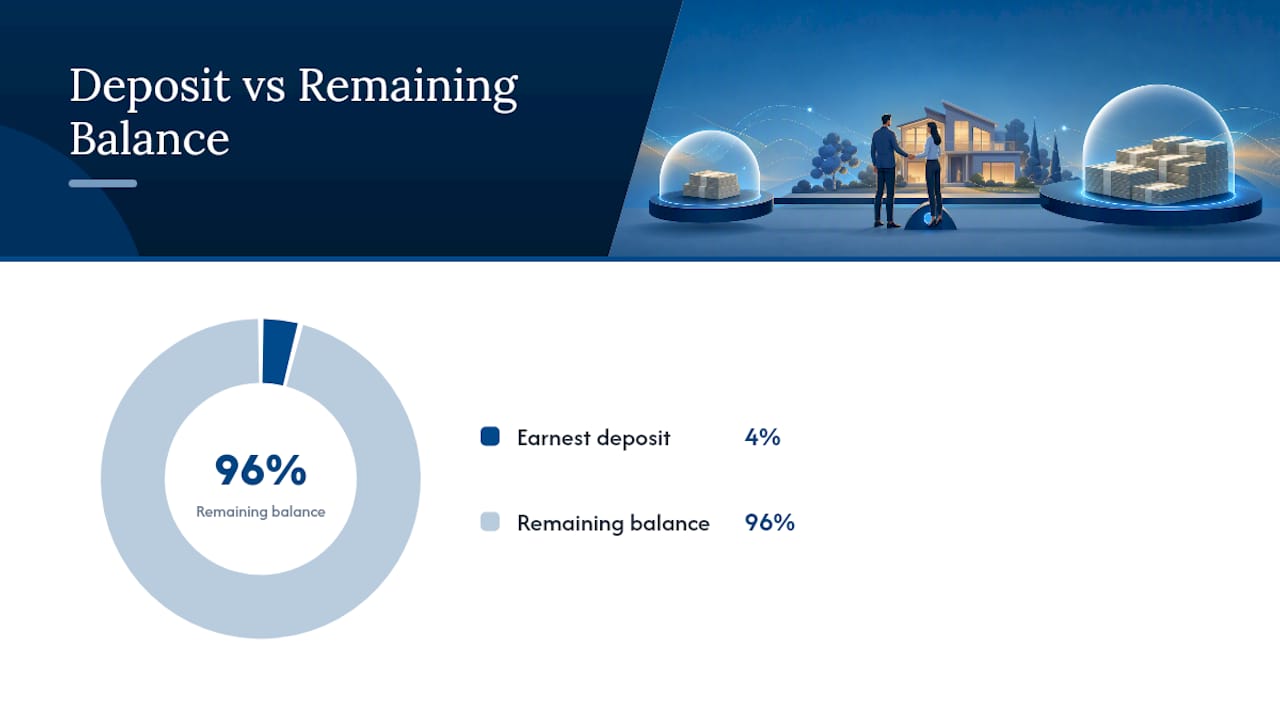
Once you close, escrow simply nets the deposit against what you owe. If your $400,000 cash purchase carried a $16,000 deposit, you wire the remaining $384,000 at closing, and the deposit that’s already sitting in escrow covers the rest.
When Is Earnest Money Refundable in a Cash Sale?
The short answer: it depends entirely on which contingencies you kept, and whether you’ve already waived them. Cash removes the financing and appraisal contingencies from the equation, but it doesn’t automatically remove your right to inspect the property or review the title.
Two protections still matter in almost every cash deal:
- Inspection contingency. This gives you a window, often 7 to 14 days, to have the home professionally inspected and back out or renegotiate if something serious turns up.
- Title review. This protects you if the title search turns up a lien, boundary dispute, or ownership issue that wasn’t disclosed.
As long as either of those windows is still open, you can typically cancel and get your deposit back. The trouble starts once you remove a contingency in writing. Removing a financing or appraisal contingency doesn’t apply to cash deals since neither existed, but removing your inspection or title contingency does something specific and binding: it tells the seller you’ve accepted the property as is, and it usually forfeits your right to a refund if you walk away afterward for reasons outside the contract.
Forfeiture disputes happen more often than buyers expect. If a buyer cancels after the inspection deadline with no valid contractual reason, the seller can reasonably claim the deposit. When both sides disagree about who’s entitled to the money, the escrow company won’t just hand it to either party. It can interplead the funds into court, a process that can drag on for months and cost both sides in legal fees. Some contracts include a liquidated damages clause capping what a seller can keep if a deal falls apart. Read that clause closely before you sign, since state rules on caps and deadlines vary and your local contract form is the final word, not a generic template.
Practical Steps to Protect Your Earnest Money
A little discipline early in the process prevents most disputes later. Here’s what actually protects your deposit:
- Keep the contingencies that matter to you. Inspection and title review are the two worth fighting to retain, even in a fast cash deal. Waiving them speeds things up but removes your exit door.
- Set realistic deadlines. A 5 day inspection window on an older home invites trouble. Give yourself enough time to actually get an inspector out and review the report.
- Confirm your escrow holder in writing. Get a receipt showing the amount, date, and holder before you consider the deposit “safe.”
- Put every notice in writing. Whether you’re removing a contingency or canceling the contract, send it in writing and keep copies, along with bank statements showing the transfer.
- Never pay the seller directly. Earnest money belongs in escrow, not in the seller’s pocket, no matter how much they push for it.
Pro Tip: Save every email, text, and PDF related to your deposit in one folder from day one. If a dispute ever reaches escrow interpleader or mediation, that paper trail is often what settles it fastest.
Reviewing which contingencies to keep or waive before you sign anything is worth the extra hour it takes.
What Happens to the Deposit at Closing?
At closing, your earnest money simply reduces the amount you owe. Escrow applies the deposit against the purchase price, then you wire whatever remains. There’s no separate step, no additional paperwork on your end beyond the closing documents you’d sign anyway.
Timing is where cash and financed deals really diverge. A cash closing typically wraps up in 7 to 14 days, while a financed purchase usually needs 30 to 45 days for underwriting, appraisal, and loan approval. Escrow coordinates the final numbers on both sides, including paying off any existing mortgage the seller still owes, so the seller walks away with clean proceeds and you walk away with clear title.

What We See in Fast Cash Closings
Sell Dave Your House has spent over 16 years buying homes across Metro Detroit, and earnest money questions come up in nearly every transaction. Our process delivers a fair cash offer within 24 hours and can close in as little as seven days.
In practice, sellers working with fast cash buyers often see smaller deposit disputes than in traditional sales, mostly because the shorter timeline leaves less room for cold feet. Buyers who keep a brief inspection window, rather than waiving it outright, tend to have the smoothest closings.
When to Waive Contingencies and When to Keep Them
Waiving inspection or title review makes sense on a recently renovated home or when a strong price justifies the risk. Keep both on older properties, estate sales, or any home with systems you can’t verify quickly.
— Real Estate Team
Get a Fair Cash Offer Without the Earnest Money Guesswork
Certain cash home buyers offer sellers a way to skip deposit disputes with a fair cash offer within 24 hours, no repairs, no realtor commissions, and a closing timeline the seller controls.

If you’re weighing a cash offer against a traditional listing, the earnest money question usually comes down to trust. Some companies handle escrow and deposit logistics directly, so sellers are not left wondering where the money sits or who is holding it accountable. Before you sign anything with any buyer, ask exactly how they’ll structure the earnest money, who holds it, and what triggers a refund, and get those answers in writing before you deposit a dollar.
Curious what your home is worth in a fast, all-cash sale? Get a no-obligation cash offer and see how the numbers compare to a traditional listing, or browse our seller resources to understand each step before you commit.
Sources
- Deposits (National Paralegal College)
- What Is a Cash Only Home Sale and How Does It Work? (LegalClarity)
Check your state’s standard contract form for exact deadlines and any caps on deposit forfeiture.
FAQ
Why Is a Cash Sale Better Than a Mortgage for Sellers?
Cash sales close faster, often in 7 to 14 days, and remove the risk of a buyer’s loan falling through or an appraisal derailing the price.
Who Gets Earnest Money if a Sale Falls Through?
It depends on which contingency the buyer used to cancel. If a valid contingency, like inspection or title, was still active, the buyer typically gets a refund; if the buyer walks away after waiving those protections, the seller usually keeps the deposit.
Is $1,000 Earnest Money Good?
A flat earnest money amount on the low side can read as a weak signal, especially in a cash offer where sellers expect 3% to 5% of the purchase price rather than a fixed low number.