

This Week for U.S. Homeowners: Sell With Back Taxes, When Cash Works
Yes, you can sell a house even if you owe back property taxes. Recorded tax liens don’t stop a sale outright, but they must be paid off, subordinated, or otherwise legally cleared at or before closing. Which path makes sense for you depends on how much equity you have, how far along the delinquency is, and whether a tax sale is already on the calendar.
TL;DR:
- Paying back property taxes at closing is the simplest solution if the home’s equity covers the owed amount, preventing further liens.
- Selling to a cash buyer can close quickly, often within days, which is crucial when a tax sale or auction date is imminent.
- Contacting the county treasurer early to understand payoff amounts and explore hardship payment plans can buy valuable extra time.
- A short sale or deed-in-lieu is an option when mortgage debt and back taxes exceed the property’s value, but both require lender approval.
- The timeline to a tax sale varies greatly by state, with some counties moving toward sale within months, making prompt action essential.
Table of Contents
- Can You Sell a House With Back Property Taxes? Your Options
- How Do Tax Liens Actually Affect a Home Sale?
- Your Checklist to Sell a Home With Tax Debt
- How Long Do You Have Before a Tax Sale Happens?
- What Happens to Sale Proceeds at Closing?
- Who Should You Call, and When?
- When a Fast Cash Sale Actually Makes Sense
- Ready to Get a Cash Offer on Your House?
- Sources
- FAQ
Can You Sell a House With Back Property Taxes? Your Options
You have more room to maneuver than you probably think, and the right route usually comes down to two questions: does your equity cover what you owe, and how much time do you have left before a tax sale?
- Pay off the lien at closing. If your sale price covers the mortgage and the back taxes, the title company simply pays the county from proceeds. This is the cleanest and most common outcome when there’s equity in the home.
- Sell to a cash buyer. A vetted local cash buyer can move fast, often closing in days rather than months, which matters when a tax sale date is approaching. Cash sales remove financing and repair contingencies that routinely slow down traditional closings.
- Set up a payment plan. Many counties let you enter an installment agreement or apply for hardship relief, which can pause the clock on a tax sale while you list the property the normal way.
- Consider a short sale or deed-in-lieu. When the mortgage plus back taxes exceed what the house is worth, these become real options, though both require lender sign off and can affect your credit.
- Negotiate with the lienholder if the debt has already been sold. Once a tax lien has been sold at auction, the investor holding it, not the county, controls your redemption terms.
How Do Tax Liens Actually Affect a Home Sale?
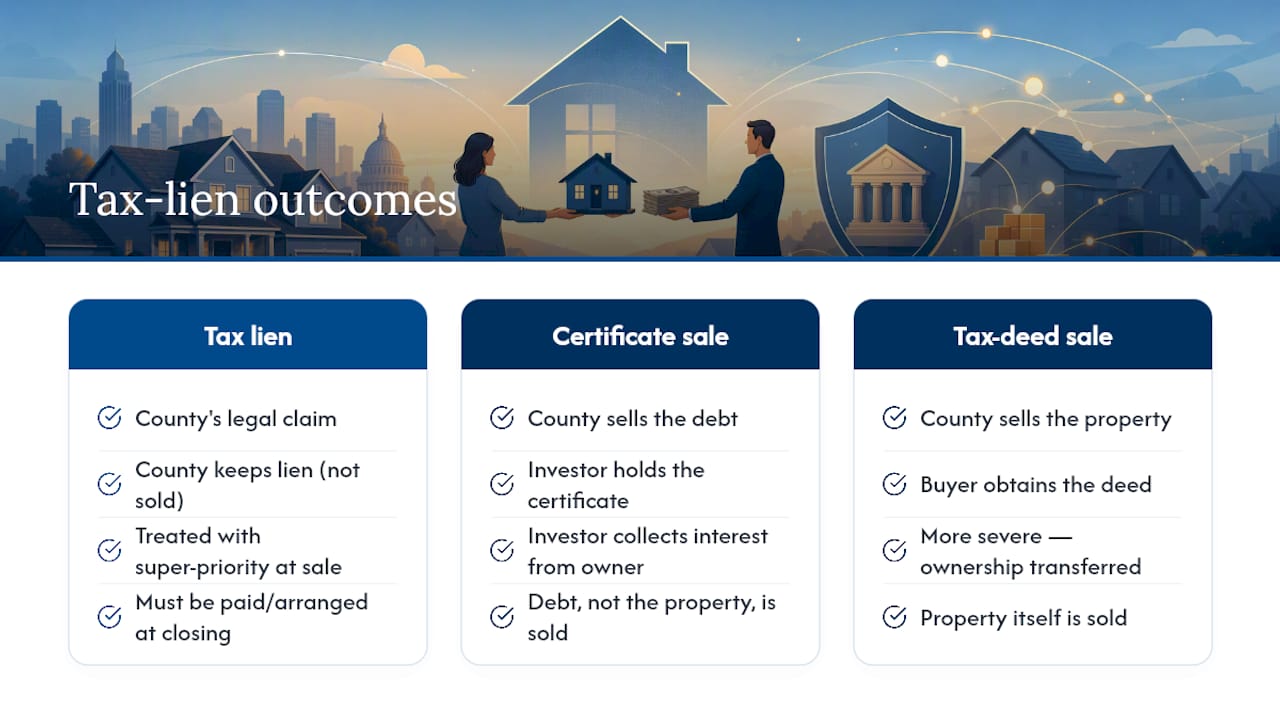
A property tax lien, a tax-lien certificate sale, and a tax-deed sale are three different things, and mixing them up leads to bad decisions. A property tax lien is simply the county’s legal claim against your home for unpaid taxes. A tax-lien certificate sale is when the county sells that debt to an investor, who then collects interest from you. A tax-deed sale is a more serious step: the county sells the property itself, not just the debt.
Local property tax liens usually carry statutory super-priority, meaning they get paid ahead of your mortgage when the home sells, regardless of which lien was recorded first. Federal tax debt works differently. If the IRS has filed a lien, sellers sometimes use IRS Form 14135 for a certificate of discharge, Form 14134 for subordination, or Form 12277 for withdrawal to clear the way for a sale, though these forms involve real paperwork and often benefit from a tax professional’s help. Title companies won’t issue an owner’s title insurance policy until every recorded lien is either paid or arranged for at closing, which is exactly why lien resolution can’t wait until the last minute.
Your Checklist to Sell a Home With Tax Debt
Selling with back taxes owed goes smoothly when you work through it in order, rather than jumping straight to listing the house.
- Call the county treasurer for exact payoff numbers. Get the current amount owed in writing, including any accrued interest or penalties, and do the same for any other recorded lienholders.
- Order a title search early. A title company or attorney can identify every lien on the property and where each one ranks in payoff priority, before you accept an offer.
- Pick your sale route based on equity and timeline. If proceeds cover everything, a traditional listing works fine. If time is short or equity is thin, a cash buyer or short sale becomes more realistic.
- Put any negotiated agreement in writing. Whether it’s a county payment plan, a redemption payoff, or a settlement with a lien-holding investor, get the terms documented before you move forward.
- Give your closing agent written payoff instructions. This ensures liens are paid directly from proceeds at the closing table and that clear title actually transfers to the buyer.
Pro Tip: Ask the county treasurer whether your account qualifies for a hardship payment plan before you list the house. Even a short pause in the delinquency clock can buy you time to sell on your own terms instead of the county’s.
How Long Do You Have Before a Tax Sale Happens?
Delinquency typically moves through predictable stages: the tax goes unpaid, a lien gets recorded, the county sells the lien or the property itself, and then a redemption period opens before any foreclosure becomes final. How long each stage takes varies enormously by state. Some jurisdictions move toward a tax-lien or tax-deed sale within months; others allow years of unpaid taxes before reaching that point. Your county treasurer is the only reliable source for your exact dates, since state statutes on this differ significantly.
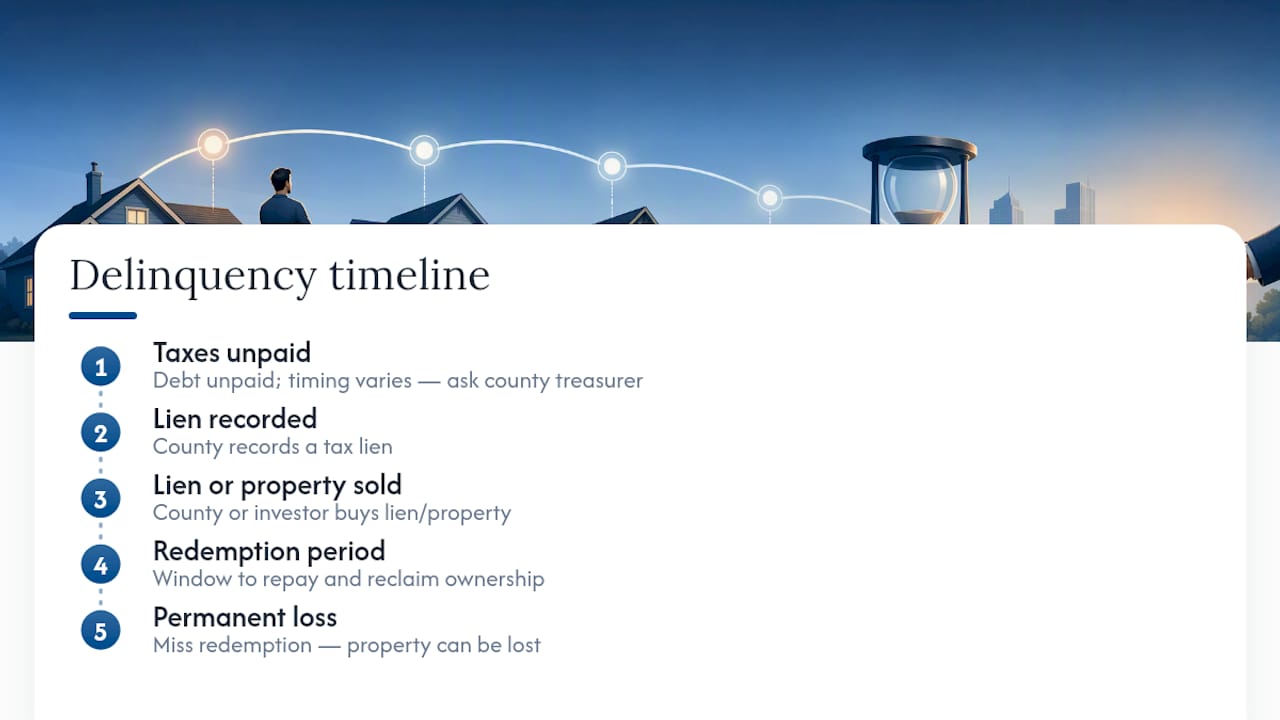
The redemption period is your window to pay off the debt and reclaim clear ownership after a lien sale. Miss it, and the investor or the county can move toward taking the property permanently. Waiting to make that first call to the county is the single costliest mistake, because every week that passes narrows your negotiating room.
What Happens to Sale Proceeds at Closing?
Closing works like a waterfall. Sale costs and government liens, including back property taxes, get paid first. Only what’s left after that flows to you as the seller. This is standard because property tax liens carry super-priority status over nearly every other claim on the home, mortgage included.
If your sale price doesn’t cover everything owed, you have three realistic paths: pay the shortfall out of pocket, negotiate a reduced payoff with the lienholder, or pursue a deed-in-lieu arrangement instead of a sale. When resolution is partial or pending, escrow can sometimes hold back a portion of proceeds until the final payoff amount is confirmed, which is exactly why written payoff instructions to your closing agent matter as much as the sale price itself.
Who Should You Call, and When?
If you’re early in delinquency with no sale date looming, start with your county treasurer to ask about payment plans or hardship programs. If a tax sale or auction is imminent, contact a HUD-approved housing counselor and a tax attorney immediately, since both can offer options a general search won’t surface. If speed is the priority, a vetted local cash buyer can help resolve existing liens as part of the sale and close before a deadline hits. Loop in a title company early regardless of your route, since they’re the ones who ultimately confirm the payoff chain before anything closes.
When a Fast Cash Sale Actually Makes Sense
A cash sale isn’t the right move for everyone, but it earns its place when a tax sale date is close, when the home needs repairs you can’t afford to make before listing, or when foreclosure risk is mounting faster than a traditional listing can respond to. Some cash buyers buy homes as-is, make offers within 24 hours, and can close in as little as seven days, which matters when the county’s calendar is the thing driving your decision. We’d rather you verify those numbers yourself and use this route only if it truly fits your timeline, not because it’s the only option you’ve heard of.
— Real Estate Team
Ready to Get a Cash Offer on Your House?
If you’re staring down a tax sale date or a mortgage payment you can’t cover, waiting for a traditional listing to find a buyer is a real gamble. Some companies specialize in helping homeowners who need certainty now, not a maybe in ninety days. They buy homes as-is, cover standard closing costs, and can provide fair cash offers within 24 hours.

Speed and certainty come with a tradeoff worth knowing upfront: a cash offer typically comes in below what a fully marketed, repaired listing might eventually fetch. For a homeowner facing an approaching tax sale or a house that needs work you can’t finance, that tradeoff often makes sense. You’ll need basic documentation, like your mortgage statement and any county tax notices, but the process itself skips repairs, showings, and financing delays entirely. If a fast, as-is sale fits your situation, you can request your cash offer here and see the number before you commit to anything.
This article is general information, not a substitute for advice from a qualified financial advisor. Consult a qualified financial professional about your own circumstances before acting on anything here.
Sources
- Unpaid Taxes on Property: Liens, Sales, and Penalties - LegalClarity
- IRS Form 14135
- Find a housing counselor - CFPB
FAQ
Can I still sell my house if I owe back taxes?
Yes. Recorded tax liens must be paid or cleared at closing, but they don’t typically prevent you from selling as long as the payoff is arranged in writing beforehand.
How long can property taxes go unpaid before a tax sale?
It varies widely by state and county, ranging from months to years, so contact your county treasurer directly for your exact delinquency timeline and redemption deadline.
How do I avoid paying capital gains tax after selling my house?
If the home was your primary residence for at least two of the last five years, you may exclude a portion of the gain under IRS rules; a tax professional can confirm whether back taxes owed affect your specific liability.
What taxes do you pay when you sell a house?
Beyond any back property taxes settled at closing, sellers typically face transfer taxes and potential capital gains tax, both of which vary by state and individual circumstances.
Does a cash sale from Sell Dave Your House help if I’m behind on property taxes?
It can, particularly when a tax sale date is close, since a fast, as-is close lets you resolve liens from proceeds before the county’s deadline arrives.