
Sell Fast With Code Violations: Cash Offers in a Week for Sellers
Yes, in most cases you can sell a house with building code violations. You’ll need to disclose them, and financing limits may narrow your buyer pool, so start by pulling your permit and violation records and scheduling a targeted inspection. If timelines are tight or repairs aren’t affordable, an as-is sale to a cash buyer is usually the most reliable way forward.
TL;DR:
- Selling with violations is possible, but disclosure is mandatory and can limit financing options, especially with unpermitted or unrecorded work.
- Appraisers will note code non-compliance, which can exclude unpermitted square footage from valuation, complicating loan approval.
- Retroactive permits for structural work often take four to twelve weeks and can cost thousands, while simple permit close-outs may take only weeks.
- An as-is cash sale may be the fastest and most reliable route if repair costs are high or timelines are tight, avoiding delays caused by permitting and financing hurdles.
- Proper documentation, including permit history, violation notices, and inspection reports, is essential for disclosure, negotiations, and resolving liens or fines before closing.
Table of Contents
- What Counts as a Code Violation When You Sell House: Code Violations Cases
- Do You Have to Disclose Known Violations to Buyers?
- How Do Violations Affect Appraisal and Financing?
- Should You Repair, Offer a Credit, or Sell As-Is?
- Preparing to List or Sell as-Is: A Seller’s Checklist
- What Timeline and Costs Should You Expect?
- How Fines and Liens Affect Your Closing
- Why the As-Is Route Often Beats Waiting on Permits
- Get a Cash Offer for Your House Even With Code Violations
- Where to Verify Disclosure, Appraisal, and Permit Rules
- Sources
- FAQ
What Counts as a Code Violation When You Sell House: Code Violations Cases
Code violations fall into a few distinct categories, and knowing which one applies to your property changes your entire strategy. An open permit means work was started, inspected partway, but never signed off. A no-record situation means work happened with no permit pulled at all. A cited violation means code enforcement has already flagged the property and possibly issued a fine.
Open permits often transfer risk to the buyer because the paperwork trail already exists. No-record work is trickier. Nobody documented the scope, materials, or inspection history, so a buyer’s lender has no way to verify safety.
The most common violation categories sellers run into include:
- Unpermitted additions or converted spaces (finished basements, garage conversions, added bedrooms)
- Electrical work done without inspection (panel upgrades, rewiring, added circuits)
- Structural changes (removed load-bearing walls, deck additions, foundation repairs)
- Plumbing modifications without permits
- Missing or outdated HVAC permits
- Absent or non-functioning smoke and carbon monoxide detectors
- Exterior maintenance issues (peeling lead paint, unsafe stairs, roofing problems)
Most violations surface during a buyer’s inspection or when a municipality cross-references a building permit database against a sale listing. A surprising number come from a prior owner’s DIY project. That finished attic someone built in 2015 without a permit becomes your problem the moment a home inspector opens the access panel.
Pro Tip: Request your property’s permit history directly from your local building department before you list. It usually takes a few days, and it’s the single fastest way to know exactly what you’re dealing with instead of guessing.
Do You Have to Disclose Known Violations to Buyers?
Nearly every state requires sellers to disclose known material defects, and code violations qualify. This applies whether you’re selling through an agent or as-is; “as-is” describes the property’s condition, not your legal disclosure obligation, and failing to disclose known defects can still expose you to a lawsuit or a demand to unwind the sale.
Preparing your disclosure packet is more straightforward than most sellers expect. Follow these steps:
- Gather permit records. Request a full permit history from your municipal building department, including closed, open, and expired permits.
- Collect any violation notices. If code enforcement has ever contacted you, keep copies of every letter, fine notice, or inspection report.
- Document known issues you haven’t reported. If you know about unpermitted work even without a formal citation, it’s still a “known” defect you must disclose.
- Complete your state’s disclosure form accurately. Most states use a standardized seller disclosure form with specific checkboxes for permits, additions, and known defects. Answer every relevant line rather than leaving it blank.
- Keep copies of everything you give the buyer. This protects you if a dispute arises after closing.
The legal line between “known” and “unknown” matters here. You’re generally not liable for defects you genuinely didn’t know about. But if you lived in the house, hired the contractor, or received a notice from the city, that defect counts as known, and skipping it on your disclosure form is the most common trigger for post-closing claims. Federal disclosure guidance around material property defects reinforces the same principle: sellers who knowingly conceal hazards face real legal exposure, not just a canceled deal.
How Do Violations Affect Appraisal and Financing?
Here’s where most sellers get blindsided. Legally selling the house is one thing. Getting a buyer’s loan approved is another problem entirely, and it’s often the bigger obstacle.
Appraisers are required to note non-compliance with building or zoning codes when they see it. Once that’s on the appraisal report, the loan file changes.
- Conventional loans may proceed with added conditions, such as a repair escrow or a follow-up inspection.
- FHA and VA loans tend to be stricter, and FHA and VA appraisers can require the violation to be cured before funding, or exclude unpermitted square footage from the property’s value entirely.
- Unpermitted square footage getting excluded from the appraised value creates a cash-to-close gap. If your buyer’s loan amount is based on 2,200 square feet but the appraiser only counts 1,800 because of an unpermitted addition, your buyer may suddenly need thousands more in cash to close.
- Homeowner’s insurance underwriting adds another layer. Carriers can decline coverage or charge higher premiums for unpermitted electrical or structural work, and a buyer who can’t secure insurance can’t close a mortgage.
Most mortgage lenders will not finance a property with unresolved safety or structural violations, which narrows the realistic buyer pool toward cash buyers and investors willing to take on the remediation themselves. That single dynamic explains why homes with known violations often sit longer on the traditional market. It’s not that buyers don’t exist. It’s that financed buyers can’t always get to the closing table.
Quick fact: Open permits are usually easier to resolve than fully unpermitted work, because the permit file already exists and often just needs a final inspection to close out, according to Doineedapermit.
Should You Repair, Offer a Credit, or Sell As-Is?
Choosing the right path comes down to three questions: how much repair costs, how much time you have, and how much certainty you need. Walk through this decision order before you commit to a strategy.
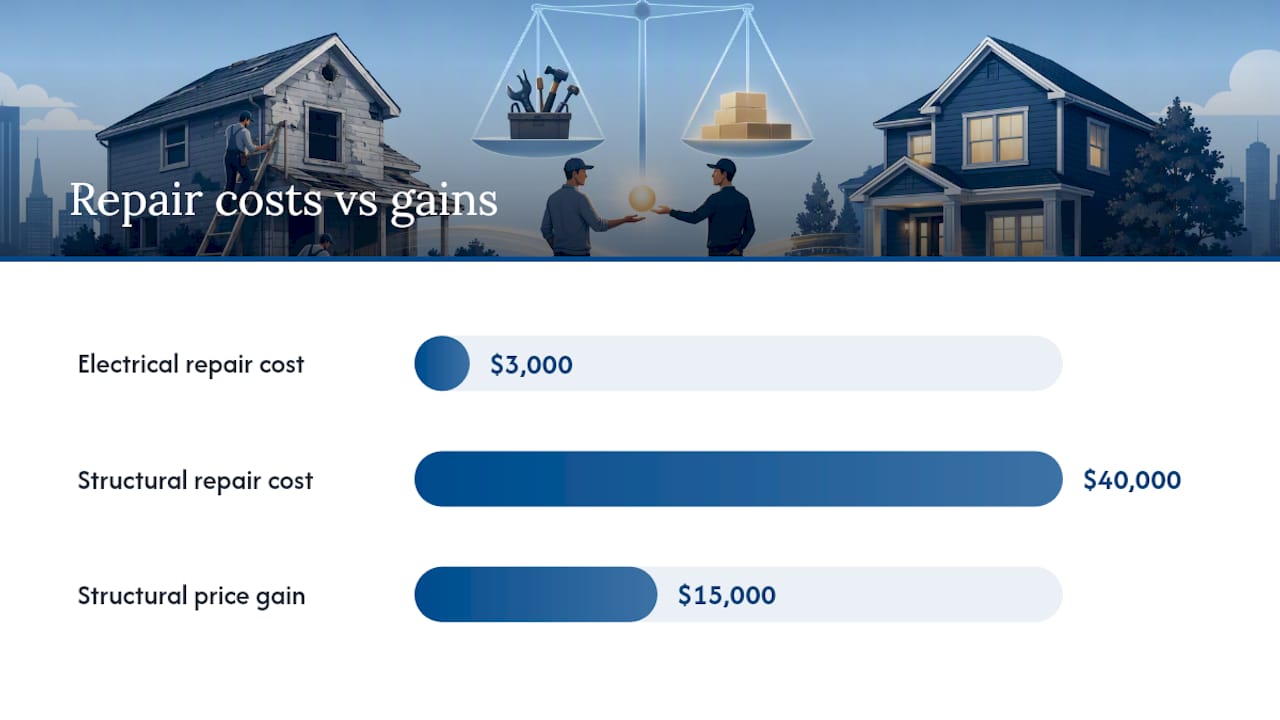
- Calculate the real repair cost versus expected price gain. If fixing an electrical violation costs $3,000 and it opens your home to conventional financing, that’s usually worth doing. If a structural retrofit costs $40,000 and only adds $15,000 to your sale price, it isn’t.
- Check whether you can wait for permits and inspections. Retroactive permitting takes time. If you’re facing foreclosure, a job relocation, or an inherited property with mounting holding costs, waiting weeks or months for permit approval may not be realistic.
- Consider a credit or price reduction if you have some flexibility. This keeps your buyer pool wider than an as-is cash sale while still acknowledging the issue. Common structures include a defined dollar credit at closing, an escrow holdback where funds are set aside until repairs are completed post-closing, or a straightforward price reduction that reflects estimated repair costs.
- Decide if a cash sale solves your specific problem. If you need certainty over maximum price, if you can’t fund repairs upfront, or if enforcement deadlines are closing in, selling as-is to a cash buyer sidesteps lender underwriting conditions entirely. The trade-off is usually a lower net price than what a fully repaired home would fetch on the open market, but you avoid months of permit delays and repair costs you’d have to pay out of pocket first.
Negotiating a credit works best when you can attach a specific number to the violation. Get a contractor estimate, present it to the buyer’s agent, and offer a credit capped at that estimate rather than an open-ended promise. Escrow holdbacks work well for cosmetic or minor code items where the lender is comfortable closing before the fix is finished.
Pro Tip: If you’re leaning toward a cash sale, ask upfront who pays closing costs and whether the offer accounts for the violation already. A transparent cash buyer will explain their number instead of just handing you a figure.
Preparing to List or Sell as-Is: A Seller’s Checklist
Once you’ve picked a direction, work through this sequence to avoid surprises at closing.
- Pull your full permit history from the municipal building department, covering every permit ever filed on the address.
- Collect inspection reports and contractor repair estimates for every known issue, even minor ones.
- Order a title search to check for recorded fines, municipal liens, or code enforcement judgments attached to the property.
- Choose your path, repair, credit, or as-is sale, based on the cost and timeline math from the previous section.
- Build your disclosure packet, including permit records, violation notices, and inspection reports, ready to hand to any serious buyer.
- Market to the right buyer type if you’re going the as-is route. Traditional retail buyers using conventional financing often walk away from cited violations, while cash buyers and investors routinely purchase homes with unpermitted work and open permits because they can absorb the remediation themselves.
This sequence matters more than it might seem. Sellers who skip the title search often discover a municipal lien mid-contract, which can delay or derail a closing that was otherwise on track.
What Timeline and Costs Should You Expect?
Timelines vary enormously depending on whether you’re dealing with an open permit close-out or a full retroactive permit for unpermitted structural work.
- Simple permit close-outs (an existing permit that just needs a final inspection) can often wrap up in a few weeks.
- Retroactive permitting for unpermitted work, where you apply for a permit after the work is already done, commonly adds four to twelve weeks, depending on your municipality’s backlog and whether the work needs to be partially exposed for inspection.
- Cost bands run wide too. Minor fixes like adding missing smoke detectors or closing out a plumbing permit might cost a few hundred dollars. Structural retroactive work, opening walls to inspect framing, or bringing an electrical panel up to current code, can run into the thousands.
Retroactive permitting for structural work often requires additional inspections that can increase both cost and duration beyond initial estimates.
Key figure: Retroactive permitting timelines for structural issues commonly stretch into months rather than weeks, according to InspectionTriage’s decision-tree guidance on unpermitted work.
If your timeline is short but you still want to preserve a sale to a financed buyer, an escrow holdback or conditional closing can bridge the gap. The lender allows closing to proceed while a defined dollar amount sits in escrow until the repair or permit close-out is complete. This only works when the lender and appraiser agree the issue is minor enough not to block funding outright.
How Fines and Liens Affect Your Closing
Municipal fines and liens get recorded against the property itself, not just against you personally, and they typically must be cleared, or otherwise formally addressed, before the title can transfer cleanly. A title search almost always catches these, so it’s better to find out early than to have your closing attorney discover a $4,000 lien three days before closing.
You generally have a few ways to resolve a lien or fine before or at closing:
- Pay it off before closing using your own funds, which produces a clean release document for the title company.
- Use an escrow holdback, where the closing agent sets aside enough of your sale proceeds to cover the fine, releasing it once the issue is resolved.
- Deduct it directly from proceeds at the closing table, which is common when the amount and resolution path are already confirmed.
- Negotiate with the municipality, since some jurisdictions will reduce fines for corrected violations or offer payment plans that a title company can work around.
Call your title company or closing attorney as soon as you know a lien exists. They’ll tell you exactly what release documentation the municipality requires, and getting that paperwork started early is usually the difference between a smooth closing and a delayed one.
Why the As-Is Route Often Beats Waiting on Permits
Most advice on code violations treats repair-first as the responsible default and a cash sale as a last resort. That framing doesn’t hold up once you actually run the math on timeline and risk.
If you’re facing foreclosure, settling an inherited property, or juggling a job relocation, four to twelve weeks of retroactive permitting isn’t a minor inconvenience. It’s a real financial exposure, especially when you’re covering a mortgage, taxes, and insurance on a house you’re also trying to unload. Waiting for a conventional buyer to secure financing on a home with unresolved violations adds even more time, since the appraisal and underwriting process alone can stretch a deal for weeks before it falls apart at the finish line.
A cash sale works because it removes the two biggest sources of delay: appraisal-driven value exclusions and lender underwriting conditions. Sellers who need certainty over maximum price, or who genuinely can’t front the money for structural repairs, tend to come out ahead by skipping the repair cycle entirely. A reputable buyer should walk you through exactly how the violation affects their offer, who covers closing costs, and what your actual timeline looks like, transparency that separates a fair transaction from a lowball one.
— Real Estate Team
Get a Cash Offer for Your House Even With Code Violations
Some local home buyers purchase homes as-is, including those with open permits, unpermitted work, or cited violations, allowing sellers to avoid funding repairs before selling. Such buyers may offer fair cash offers quickly and have the ability to close fast, sometimes within a week.

This works especially well if you’re dealing with an inherited property nobody’s had time to bring up to code, a foreclosure deadline that won’t wait for permit approval, or a house with structural issues you simply can’t afford to fix. Have your permit history and any violation notices ready. It speeds up the offer process and helps confirm exactly what you’re working with. Certain cash buyers cover standard closing costs and charge no realtor commissions, which can make the net amount closer to what the seller actually receives.
If your timeline is tight or your budget for repairs is zero, request your cash offer and see what your house is worth as-is, today.
Where to Verify Disclosure, Appraisal, and Permit Rules
A few primary sources are worth bookmarking if you want to double-check anything in this guide against official guidance:
- Nolo’s guide to required disclosures when selling real estate, broken down by common defect categories
- The International Code Council for model building code definitions referenced by most municipalities
- Doineedapermit of how permit status affects appraisals and mortgage approval
- InspectionTriage’s decision-tree guide for retroactive permitting and unpermitted work options
Sources
- Nolo — Required disclosures when selling real estate
- Doineedapermit
- InspectionTriage — Unpermitted work on a home inspection (decision tree and permit how-to)
FAQ
Can You Sell a House With Code Violations in California?
Yes. California follows the same general pattern as most states: you can sell with known violations as long as you disclose them accurately on the required state disclosure form. Financing limits still apply, so a cash buyer or investor is often the more realistic option for homes with serious unpermitted work.
Do Home Appraisers Check for Code Violations?
Yes, appraisers are required to report visible non-compliance with building codes when they see it during their inspection. FHA and VA appraisals tend to apply this more strictly than conventional loans, sometimes excluding unpermitted square footage from the home’s appraised value entirely.
What Are the Most Common Code Violations Sellers Run Into?
The most frequent categories are unpermitted additions or room conversions, electrical work done without inspection, structural changes, plumbing modifications, missing smoke or carbon monoxide detectors, and exterior maintenance issues like unsafe stairs or peeling lead paint.
Can You Find Out Who Reported You to Code Enforcement?
This depends entirely on your local municipality’s public records policy. Some cities keep complainant information confidential by policy, while others disclose it under public records requests. Contact your local code enforcement office directly, since the answer varies by jurisdiction and there’s no universal rule.
Does Selling to a Cash Buyer Mean I Skip Disclosure Requirements?
No. Selling as-is or to a cash buyer changes who handles the repairs, but it doesn’t remove your legal duty to disclose known defects. Sell Dave Your House and similarly transparent cash buyers still expect an accurate disclosure of what you know about the property’s condition.