
24 Hour Cash Offer: Sell a House With Mold, Stay Protected
Yes, you can sell a house with mold. Homeowners typically choose one of three paths: remediate the mold and list conventionally, list as-is with full disclosure and a price adjustment, or sell to a cash buyer who takes the property in its current condition. Before you pick a lane, document everything you know about the mold and get at least one remediation estimate or inspection. Disclosure is legally required once you know mold exists, and if a buyer is using FHA or VA financing, visible mold can stop the loan cold.
TL;DR:
- Selling without remediation may reduce the home’s value and limit the buyer pool mainly to cash investors or rehabbers, especially if mold is visible or widespread.
- FHA and VA loans typically require mold remediation before closing, as appraisers must flag visible mold as a defect that needs fixing.
- Remediation costs can reach into five figures for whole-house treatments, but if the expenses outweigh the potential price increase, selling as-is might be more practical.
- Full disclosure of all known water events, mold issues, and remediation efforts is legally necessary, regardless of whether the property is sold “as-is.”
- Buyers and lenders are increasingly cautious about mold, which can trigger legal risks for sellers who hide known problems or fail to provide clearance documentation.
Table of Contents
- How Do You Sell a House With Mold? Comparing Your Options
- How Does Mold Affect Home Value and Financing?
- What Does Mold Remediation Cost Before You Sell?
- What Are the Legal Disclosure Rules for Selling a House With Mold?
- What Inspection and Remediation Steps Should Sellers Take?
- Practical Checklist: How Do You Decide Which Path to Take?
- Potential Health Risks and Long-Term Liability to Sellers
- Strategies for Negotiating Mold Issues With Buyers
- How Does Mold Affect Homeowner Insurance and Claims?
- Options for Seller Financing or Incentives Related to Mold Issues
- Legal Remedies and Dispute Resolution if Mold Problems Arise Post-Sale
- Sell Dave Your House: Why We Buy As-Is and How That Helps Sellers With Mold Issues
- How to Request a Cash Offer From Sell Dave Your House
- Sources
- FAQ
How Do You Sell a House With Mold? Comparing Your Options
Each path trades speed for money, and money for certainty. Here’s how they stack up against each other.
- Remediate, then list. If your remediation estimate comes in well below the value the fix adds back, this usually nets you the highest sale price. It also reopens the buyer pool to conventional, FHA, and VA financing, since a clean inspection removes the biggest reason lenders balk.
- List as-is with disclosure. You skip the remediation cost and the wait, but you accept a lower offer and a smaller pool of interested buyers, mostly cash investors and rehabbers. This route only works if your disclosure paperwork is airtight and specific about what you know.
- Sell to a cash buyer. This is the fastest route to a closed sale with the least uncertainty. Proceeds tend to run lower than a fully remediated listing, but you skip remediation costs, showings, and the risk of a financed deal collapsing mid-escrow.
The math shifts hard when a buyer is financing through FHA or VA. HUD’s appraisal guidance requires appraisers to flag visible mold as a property defect, and that flag typically has to be cleared before the loan can close. That single rule pushes many “list as-is” sellers toward remediation anyway, or toward buyers who don’t need a mortgage at all.
How Does Mold Affect Home Value and Financing?
Visible, undisclosed-until-inspection mold routinely knocks a meaningful chunk off a home’s negotiated price, and the discount tends to grow with the size and location of the problem. HVAC contamination or mold behind walls scares buyers more than a bathroom ceiling spot, because it signals hidden damage they can’t fully price without opening walls.
Once mold shows up on an appraisal, your buyer pool narrows fast. Cash investors and rehabbers stay in the game because they’re pricing the repair into their offer from the start. Conventional and government-backed mortgage buyers are far more likely to walk, not because they don’t want the house, but because their lender won’t let them close without remediation.
That’s the practical bite of the HUD appraisal standard: an FHA or VA appraiser who spots mold typically conditions loan approval on professional cleanup and, often, a clearance report. If you’re mid-contract with a financed buyer and mold turns up during inspection, expect one of three outcomes: you agree to remediate before closing, you offer a credit sized to cover the work, or the buyer cancels and you’re back on the market with a disclosed issue you now have to reveal to the next buyer too.
Health concerns add pressure to these negotiations. The CDC notes that mold exposure can trigger or worsen respiratory symptoms in people who are sensitive to it, which gives buyers and lenders a habitability argument, not just a cosmetic one, for insisting on remediation before they’ll move forward.
What Does Mold Remediation Cost Before You Sell?
Remediation pricing depends almost entirely on square footage, location in the house, and whether mold has already compromised drywall, subfloor, or HVAC ductwork. A contained bathroom job might run a few hundred dollars. A whole-house job with structural drying and duct cleaning can climb into five figures fast.
National data from Angi indicates that typical remediation projects commonly fall within a moderate cost range, with whole-house or structurally involved cases potentially reaching significantly higher amounts depending on damage extent and HVAC involvement.
Hidden costs catch sellers off guard more than the cleanup line item itself. If mold has spread behind finished walls, expect demolition and rebuild costs on top of the remediation fee. Severe cases sometimes require temporary relocation while crews work, and most reputable contractors will recommend clearance testing after the job, which adds a few hundred dollars but gives buyers documented proof the space is clean.
Weigh these numbers against your expected price lift before committing. If remediation costs more than the value it adds back, or if you can’t afford to float the repair while your home sits on the market, that’s a strong signal to consider selling as-is instead.
What Are the Legal Disclosure Rules for Selling a House With Mold?
There’s no single federal law requiring mold disclosure. The EPA leaves disclosure requirements to individual states and courts, which means your obligations depend heavily on where the house sits. Many states have explicit disclosure statutes covering known mold and water damage; others rely on general fraud and misrepresentation doctrine, which applies nationwide regardless of whether your state has a mold-specific rule.
Here’s the part sellers consistently misunderstand: an “as-is” clause in your purchase agreement does not shield you from liability for deliberately hiding a known defect. As-is language limits a buyer’s ability to demand repairs. It does not erase your duty to disclose what you actually know. Courts across the country treat active concealment of mold, water damage, or a past insurance claim as fraud, and that exposure exists no matter what your contract says. State-by-state disclosure rules vary in how explicit the mold requirement is, but the underlying fraud exposure is consistent everywhere.
If your buyer is financing through FHA or VA, disclosure becomes almost academic anyway, because the appraiser is required to note visible mold as part of the property condition review. That inspection tends to surface exactly what you’d otherwise need to disclose voluntarily.
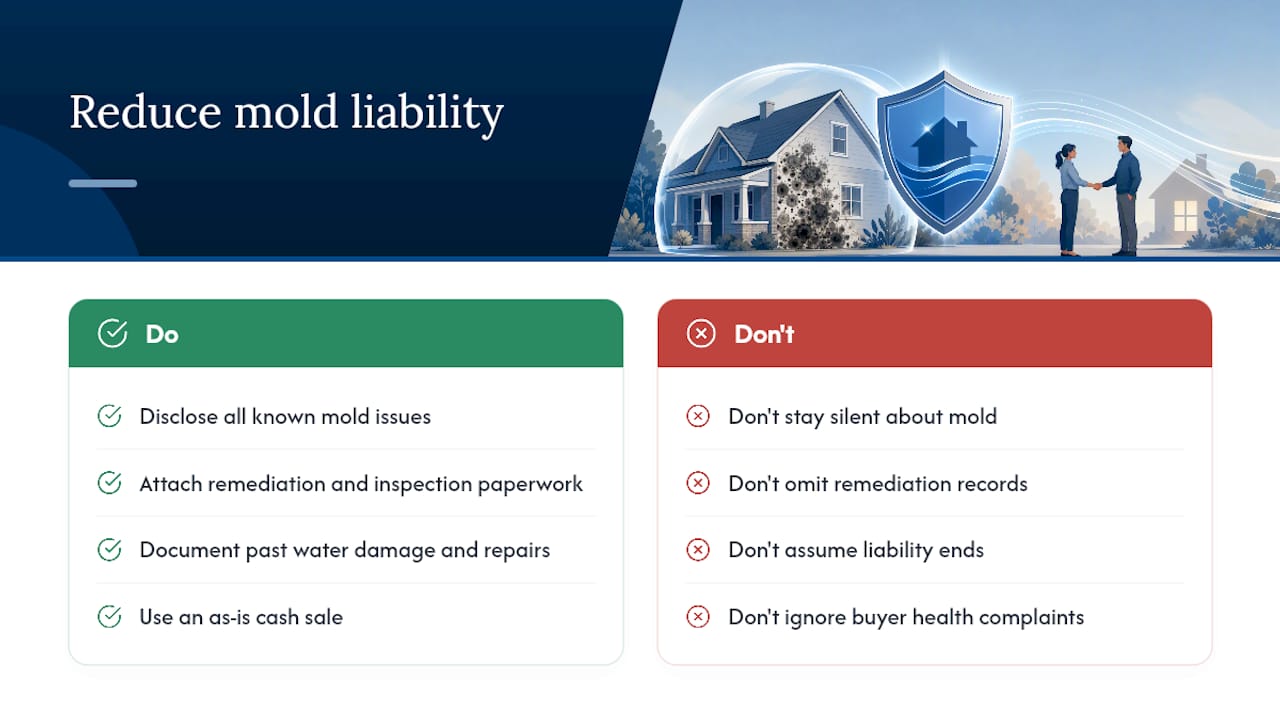
Pro Tip: Over-disclose rather than under-disclose. List every water event you remember, even ones you think you already fixed, and attach any remediation paperwork you have. A buyer who feels fully informed negotiates in good faith; a buyer who discovers a gap in your story after closing calls a lawyer.
Build your disclosure packet around these items:
- Your state’s required disclosure form, filled out completely and specifically, not with vague language like “possible moisture issues.”
- Any remediation documentation you already have: scope of work, invoices, and clearance test results.
- A written list of past water events, roof leaks, plumbing failures, or basement flooding, even ones that predate your ownership if you know about them.
- Copies of any insurance claims related to water damage or mold, since these often surface in a buyer’s title search or CLUE report anyway.
What Inspection and Remediation Steps Should Sellers Take?
Not every mold problem needs a professional. The EPA is direct about this: areas smaller than about 10 square feet can often be cleaned by a homeowner with the right precautions. Anything larger, anything behind walls, or anything tied to a past flood or chronic leak calls for a licensed remediation contractor.
It helps to know the difference between three terms buyers and agents throw around loosely:
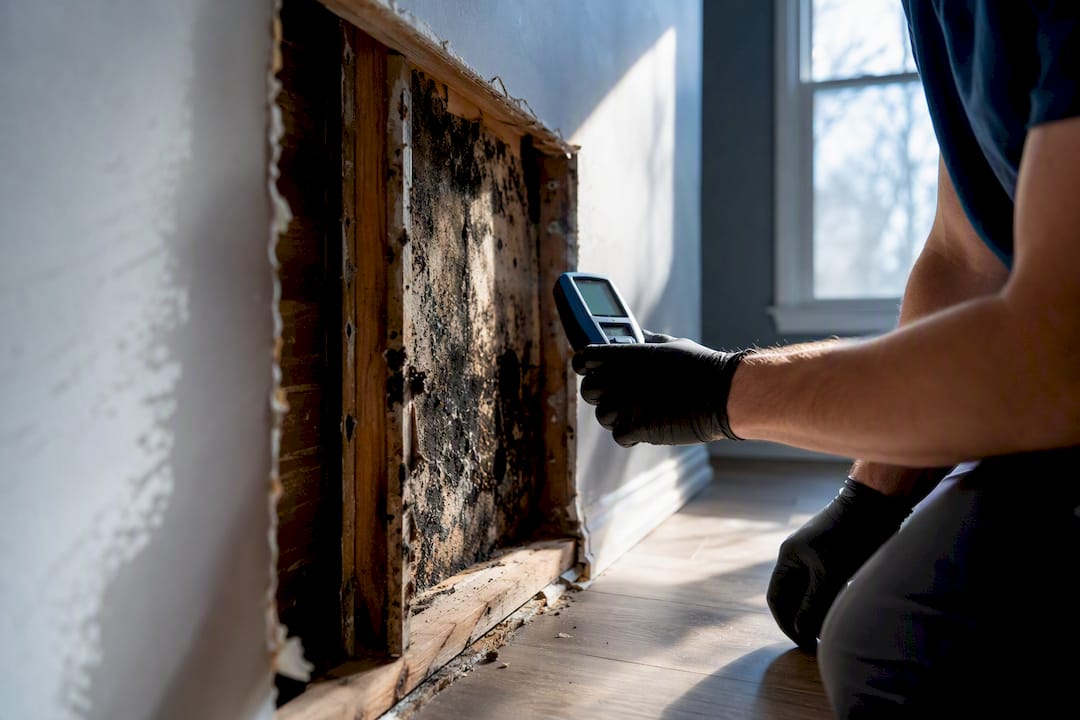
- Inspection identifies visible mold and moisture sources, usually a walkthrough with a moisture meter, no lab work involved.
- Testing samples air or surfaces to identify mold species. The EPA notes that routine testing is usually unnecessary for deciding whether cleanup is needed, since visible mold or a musty smell is enough justification to act.
- Clearance testing happens after remediation is complete, and it’s the piece that actually matters to a buyer. It confirms the space now meets acceptable air quality standards, giving you a document you can hand over at the negotiating table.
Contractors certified through the IICRC follow recognized industry protocols for containment, drying, and disposal, and buyers or their agents increasingly ask for that certification by name. When you hire a remediation crew, insist on a written scope of work, itemized receipts, and a post-job clearance test. That packet, scope plus receipts plus clearance results, is what turns “we had it fixed” into proof a skeptical buyer’s agent can actually verify.
Practical Checklist: How Do You Decide Which Path to Take?
Run through these questions before you commit to a strategy:
- Equity math: Does your remaining equity after remediation costs still make selling worthwhile, or does the repair eat too much of your proceeds?
- Timeline pressure: Do you have months to manage a remediation and listing process, or do you need funds in weeks because of foreclosure, relocation, or another deadline?
- Buyer access: Can you realistically market to cash investors, or is your local market dominated by owner-occupant mortgage buyers?
- Lender exposure: If you list as-is, are you prepared for FHA and VA buyers to walk once an appraiser flags the mold?
- Severity: Is this a surface issue in one room, or is it tied to structural water damage that a buyer’s inspector will find regardless of what you disclose?
When vetting a remediation contractor, ask directly about IICRC certification, whether clearance testing is included in the quote, the project timeline, and whether the work carries a warranty. When vetting a cash buyer, ask about their actual closing timeline, any fees deducted from your offer, and whether the offer carries contingencies that could still fall through. A genuine cash offer should be close to contingency-free.
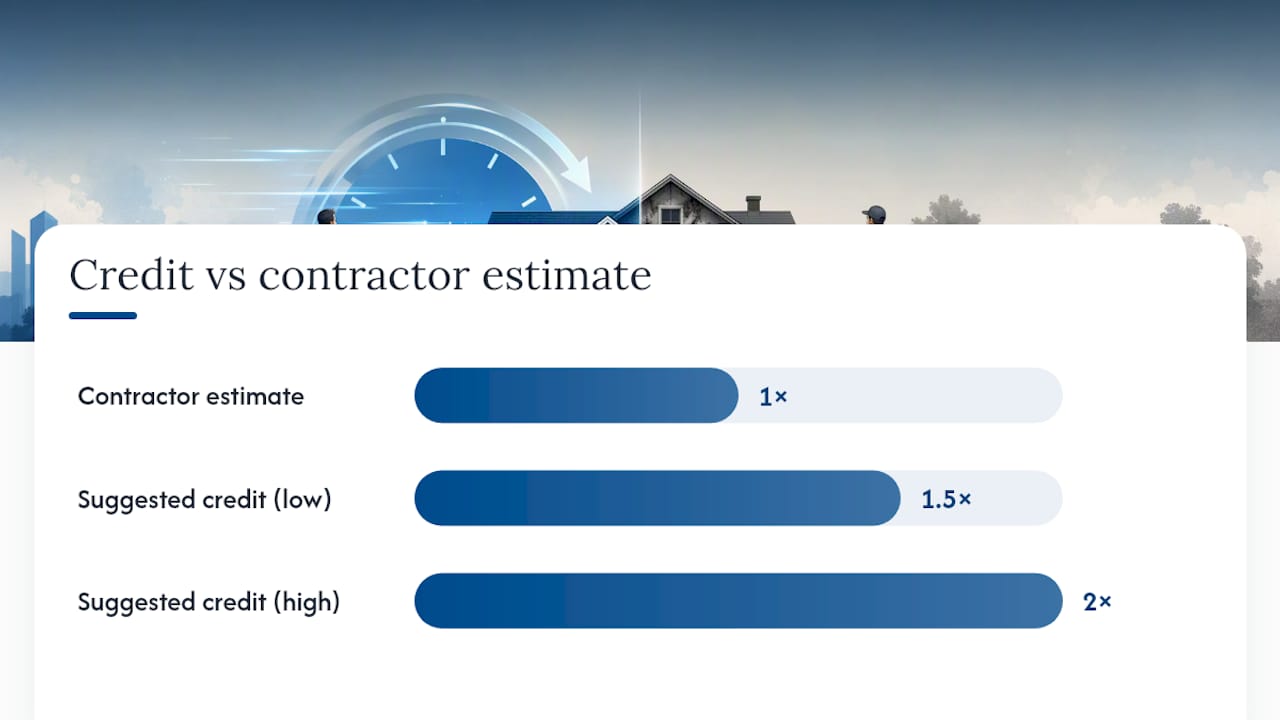
If you’re negotiating a credit instead of remediating yourself, price it at roughly 1.5 to 2 times the contractor estimate. That buffer covers the buyer’s uncertainty and the chance that hidden damage runs deeper than a surface quote suggests.
Potential Health Risks and Long-Term Liability to Sellers
Mold exposure is not just a buyer’s concern once you’ve moved out. The CDC’s guidance on mold and health points to respiratory irritation, allergic reactions, and worsened asthma symptoms in sensitive individuals, and that health angle is exactly why some buyers push harder for remediation than a purely cosmetic issue would warrant.
For sellers, the liability question outlives the closing table. If mold problems surface after the sale and a buyer can show you knew about the issue and failed to disclose it, you’re looking at potential legal exposure under fraud or misrepresentation law, separate from any mold-specific statute your state has on the books. That exposure doesn’t have an expiration date tied to the closing date. Buyers who develop health complaints tied to undisclosed mold have grounds to pursue a claim well after they’ve moved in, particularly if they can produce evidence you were aware of prior water damage or a past remediation attempt that didn’t fully solve the problem.
The safest position is thorough documentation at the time of sale, not silence. A seller who discloses everything they know, attaches whatever remediation paperwork exists, and lets the buyer make an informed decision has a dramatically stronger legal position than one who stays quiet and hopes the issue doesn’t resurface. This is also where an as-is cash sale offers a practical advantage: fewer people walking through the property over months of showings means fewer chances for a dispute to take root in the first place.
Strategies for Negotiating Mold Issues With Buyers
Negotiation over mold almost always centers on one of three moves: you fix it before closing, you credit the buyer to fix it themselves, or you adjust the price to reflect the as-is condition. Which move makes sense depends on how far along you are in the sale process.
If mold surfaces during a buyer’s inspection on a property you already listed as clean, your fastest path back to a closed deal is usually a credit rather than a scramble to hire a contractor mid-escrow. Buyers tend to trust a credit more than a rushed repair, since a rushed repair without clearance testing looks like a shortcut rather than a fix.
If you’re listing knowing about the mold upfront, price the discount into your listing price rather than waiting for it to surface in negotiations. A buyer who feels ambushed by a defect during inspection negotiates from a position of frustration. A buyer who saw the issue disclosed and priced in from day one negotiates from a position of informed choice, and that tends to produce smoother, faster closings.
Bring documentation to every negotiation, even partial documentation. A remediation quote, even one you haven’t acted on yet, gives the buyer a concrete number to negotiate around instead of an open-ended fear. Vague uncertainty is what kills deals; a specific dollar figure is something both sides can work with.
How Does Mold Affect Homeowner Insurance and Claims?
Homeowners insurance and mold have a complicated relationship that trips up a lot of sellers. According to the Insurance Information Institute, standard policies commonly exclude mold that results from long-term neglect, like a slow leak nobody addressed for months. Coverage is more likely when mold results from a sudden, covered event, such as a burst pipe, and even then only if the mold is treated promptly.
This matters for two reasons when you’re selling. First, if you filed a past insurance claim related to water damage, that claim history often surfaces in title searches or a buyer’s own research, so it’s better to disclose it yourself than have a buyer discover it and wonder what else you left out. Second, if your current mold problem stemmed from a neglected issue rather than a sudden event, don’t expect your policy to fund the remediation. That gap is exactly why so many sellers end up weighing the remediation cost against their expected sale price rather than assuming insurance will absorb it.
If you’re unsure whether a past claim affects your disclosure obligations, pull your claims history before you list. It’s better to walk into a listing knowing exactly what a background check will reveal than to be surprised by it during a buyer’s due diligence.
Options for Seller Financing or Incentives Related to Mold Issues
When a mold issue narrows your buyer pool to cash investors and rehabbers, seller-side incentives can sometimes widen it back out. A price reduction is the bluntest tool, but it’s not the only one.
Seller-paid remediation, completed before closing, is often the single most effective incentive because it reopens financed buyers as prospects, not just cash buyers. If a full remediation isn’t affordable, a partial fix paired with a credit for the remaining work can still make a property mortgage-eligible in some cases, though this depends heavily on how the specific FHA or VA appraiser assesses the remaining defect.
Seller financing itself, where you act as the lender instead of a bank, is a more specialized option that some sellers consider when a property’s mold history makes conventional lenders nervous. It shifts risk onto you as the seller rather than a bank, and it’s worth approaching with legal counsel given the disclosure and liability questions already in play. For most sellers dealing with mold, a straightforward price credit or a documented seller-paid remediation is simpler to execute and easier for a buyer’s agent to evaluate than a financing arrangement.
Legal Remedies and Dispute Resolution if Mold Problems Arise Post-Sale
If a buyer discovers mold after closing that wasn’t disclosed, the dispute typically runs through one of a few channels: direct negotiation, mediation, or litigation grounded in fraud or misrepresentation claims. Most purchase agreements include a mediation or arbitration clause, which means many disputes never reach a courtroom, they get resolved through a neutral third party first.
The strength of a buyer’s claim usually hinges on what you knew and when. If you disclosed everything available at the time of sale and the buyer’s inspector had the opportunity to evaluate the property, your legal exposure is considerably lower than if evidence surfaces showing you were aware of a specific mold problem and left it off your disclosure form. This is precisely why the documentation habits covered earlier in this guide aren’t just good practice, they’re your primary defense if a dispute ever reaches that stage.
Sellers facing a post-sale dispute should preserve every piece of documentation from the original sale: the signed disclosure form, any remediation paperwork, inspection reports, and communication with the buyer’s agent. That paper trail is what separates a quickly resolved disagreement from a drawn-out legal fight.
Sell Dave Your House: Why We Buy As-Is and How That Helps Sellers With Mold Issues
There are services available for sellers weighing remediation costs against a slipping timeline, often finding neither option comfortable. Some buyers purchase houses as-is, mold and all, so sellers do not have to pay remediation costs or endure lengthy showings while dealing with financing contingencies.
Some home buying services offer processes built around speed and honesty, often providing fair cash offers within 24 hours, and closings in as little as seven days when needed. That doesn’t replace the remediate-then-list or list-as-is paths outlined above, it sits alongside them as the option built for certainty over maximum price. If your equity math favors speed and fewer moving parts, this is the lane worth exploring first.
— Real Estate Team
How to Request a Cash Offer From Sell Dave Your House
Sell Dave Your House is the alternative to a drawn-out remediation-and-list process for homeowners in Metro Detroit dealing with mold. Instead of fronting repair costs or navigating a financed buyer’s appraisal contingencies, you get a documented, fast path to closing on the house as it stands today.

Getting an accurate cash offer moves faster when you come prepared. Pull together clear photos of the affected areas, any state disclosure forms you’ve already started, and remediation quotes if you obtained them, even if you never acted on the work. None of this is required to get an offer, but it helps us give you a fair number on the first pass instead of a preliminary estimate that shifts later.
The process itself mirrors what you’d want from any as-is sale: you share the property details, we respond with a fair cash offer within 24 hours, and if you accept, we can move toward closing in as little as seven days. There’s no repair list to complete first, and no realtor commissions eating into your proceeds. If your Detroit-area home has water damage, disrepair, or mold you don’t want to remediate yourself, get a cash offer and see what a documented, no-repair sale actually looks like for your situation.
This article is general information, not a substitute for advice from a qualified lawyer. Consult a qualified legal professional about your own circumstances before acting on anything here.
Sources
FAQ
Can You Be Sued if You Sell a House With Mold?
Yes, if you knew about the mold and failed to disclose it, a buyer can pursue a fraud or misrepresentation claim after closing. Disclosing everything you know, along with any remediation documentation, is your strongest protection against that risk.
Does a Realtor Have to Disclose if a House Has Mold?
Real estate agents generally must disclose known material defects, including mold, once they’re aware of it, though the exact obligation depends on your state’s disclosure laws. An “as-is” listing does not remove this duty for either the agent or the seller.
Does Mold Devalue a House?
Yes, disclosed and unrepaired mold typically lowers a home’s sale price and narrows the buyer pool to cash investors and rehabbers rather than financed buyers. Fully remediated mold with clearance documentation tends to have a much smaller impact on value.
Do You Have to Disclose Mold Remediation When Selling a House?
Most states require disclosure of known mold issues and past remediation, since buyers are entitled to know about prior water damage even after it’s fixed. Check your specific state’s disclosure requirements, since rules and required forms vary.
Can You Sell a House With Mold Without Fixing It?
Yes, you can sell as-is with full disclosure, or sell directly to a cash buyer like Sell Dave Your House who purchases the property in its current condition. Financed buyers using FHA or VA loans are less likely to complete the purchase without remediation, since appraisers are required to flag visible mold.