

Skip a 5% Commission: Seller Closing Costs in Michigan
On a $300,000 sale, closing costs generally land between $3,000 and $12,000. The full breakdown below covers transfer taxes, title fees, and prorations, plus sample net-proceeds math so you can see exactly where your money goes at closing.
TL;DR:
- Michigan transfer tax usually totals around $8.60 per $1,000 of sale price, with the state fee plus county surtax depending on the sale amount.
- Closing costs such as title fees, recording charges, and prorated taxes add approximately $600 to $900 on a $300,000 sale, plus around 5.5% to 6.2% for realtor commissions.
- The overall seller costs can range from 2.7% to 4.2% of the sale price, making personalized net sheets essential for an accurate bottom line.
- Smaller fees like wire charges, payoff processing, and unpaid HOA dues are common surprises and should be checked carefully before signing.
- Opting for a cash sale eliminates realtor commissions and many closing costs, but may result in a lower sale price compared to traditional listings.
Table of Contents
- What Are the Line-Item Seller Closing Costs in Michigan?
- What Does a Michigan Home Sale Look Like at Different Price Points?
- Who Pays Closing Costs in Michigan, and What’s Negotiable?
- How Does Michigan’s Transfer Tax Actually Work?
- What Small Fees Catch Michigan Sellers by Surprise?
- When Does a Cash Sale Actually Lower Your Closing Costs?
- Where Can You Verify These Michigan Closing Cost Figures?
- Sources
- FAQ
What Are the Line-Item Seller Closing Costs in Michigan?
Every Michigan closing has a handful of recurring charges, and understanding each one helps you avoid sticker shock when your Closing Disclosure lands in your inbox. Some are fixed by statute. Others shift depending on your title company, your buyer’s negotiating position, and your local market.

The biggest mandatory cost is the transfer tax. Michigan charges a state rate of $3.75 per $500 of sale price, which works out to $7.50 per $1,000, according to state statute. Most counties layer on an additional $1.10 per $1,000, bringing the combined total to roughly $8.60 per $1,000 of sale price unless your purchase agreement says otherwise.
Beyond transfer tax, sellers typically cover:
- Title and closing service fees, often a small percentage of sale price or a flat charge set by the title company
- Recording fees, generally $30 to $50 per document depending on the county’s fee schedule
- Prorated property taxes, covering your share of taxes up to the closing date
- Buyer incentives or repair credits, which some sellers budget around 2% of sale price to stay competitive in a slower market, per ListWithClever’s Michigan breakdown
- Realtor commissions, averaging around 5.5% to 6.2% combined but fully negotiable, according to Houzeo’s Michigan commission data
- Payoff and wire fees charged by your lender or title company to process your mortgage payoff
Published percentage estimates vary widely because some calculators fold in commissions and incentives while others don’t. HomeLight’s Michigan calculator shows figures ranging from around 2.7% to 4.2% depending on which line items get counted, which is exactly why a personalized net sheet matters more than any published average.
What Does a Michigan Home Sale Look Like at Different Price Points?
Numbers get real once you plug in an actual sale price.
- $175,000 sale: Transfer tax runs about $1,505 (at $8.60 per $1,000). Recording and title fees add roughly $600. A 5% commission is $8,750. Total costs land around $10,855, leaving approximately $164,145 before any mortgage payoff.
- $300,000 sale: Transfer tax is about $2,580. Title and recording fees run roughly $900. A 5% commission equals $15,000. Combined costs total around $18,480, before subtracting your remaining mortgage balance.
- $500,000 sale: Transfer tax comes to about $4,300. Title and recording fees add roughly $1,200. A 5% commission is $25,000. Total costs land near $30,500, again before payoff.
These figures don’t include your mortgage balance, which is the single biggest variable in your final proceeds. Your lender’s payoff quote includes daily interest accrual, so the exact number changes slightly each day until closing. Liens, unpaid HOA dues, or a home equity line also come off the top. The most reliable way to see your true bottom line is to request a seller net sheet from your title company or listing agent, since online calculators generally can’t account for your specific payoff amount.
Who Pays Closing Costs in Michigan, and What’s Negotiable?
Michigan custom puts most closing costs on the seller’s side of the ledger, but plenty of that is open to negotiation once an offer is on the table.
- Transfer taxes are customarily paid by the seller, though the purchase agreement can shift this by mutual agreement.
- Recording fees and title insurance typically fall to the seller for the owner’s policy, while the buyer usually covers their lender’s title policy.
- Realtor commissions come out of seller proceeds by custom, but the amount is negotiable and increasingly variable following the 2024 NAR settlement, which decoupled buyer-agent compensation from listing agreements in many markets.
- Buyer loan fees and appraisal costs are almost always the buyer’s responsibility.
If you’re trying to reduce what comes out of your check at closing, a few moves tend to work: offer a smaller buyer credit instead of a price reduction, ask the buyer to absorb their own recording costs, or negotiate commission rates directly with your listing agent before signing. None of these require aggressive tactics. They’re standard requests that experienced agents field regularly.
How Does Michigan’s Transfer Tax Actually Work?
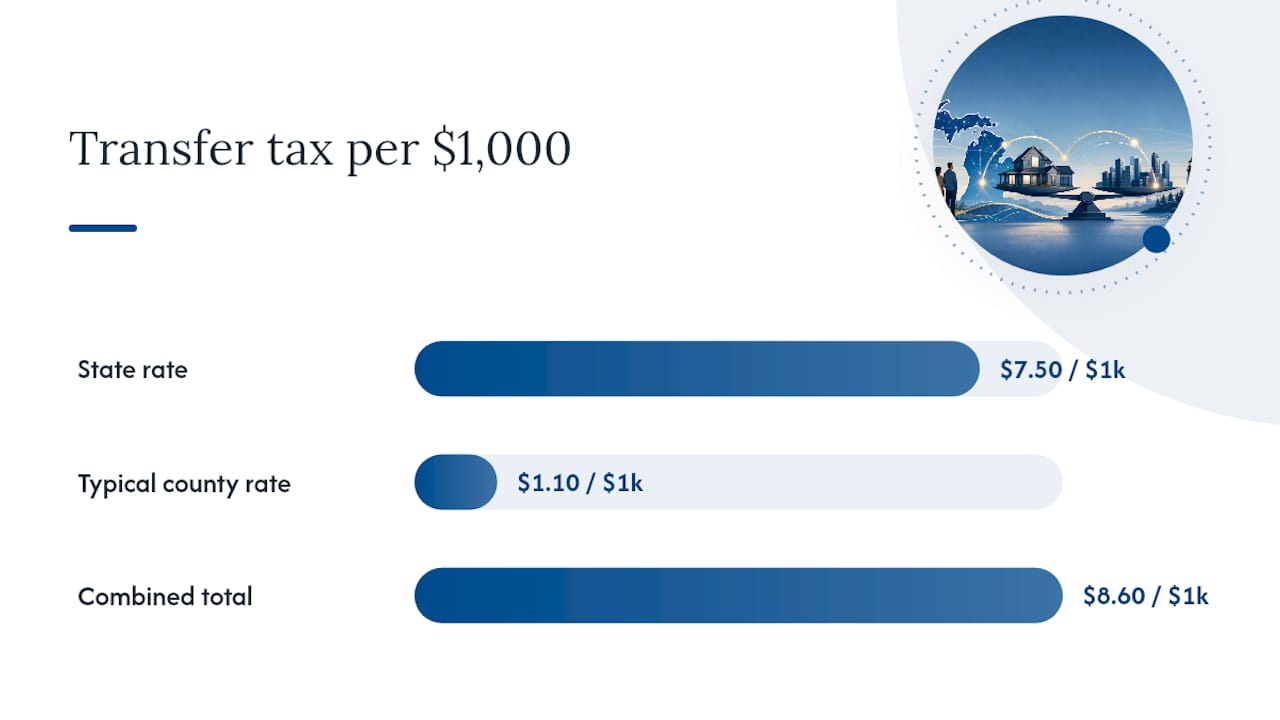
The legal foundation for Michigan’s transfer tax sits in MCL 207.525, which sets the state rate at $3.75 per $500 of the total sale price. Add your county’s local rate, commonly $1.10 per $1,000, and most Michigan sellers land at a combined rate near $8.60 per $1,000 of sale price.
A few things worth checking before you sign anything:
- The Principal Residence Exemption can qualify certain sellers for a partial transfer tax refund, but it’s not automatic. You must file Form 2796 within the required window, and missing that deadline means forfeiting the refund.
- Verify your exact transfer tax line on the Closing Disclosure. It should appear separately from title fees and recording charges.
- When in doubt about eligibility or filing deadlines, Michigan.gov’s SRETT page has the current forms and instructions, and your title company can confirm your specific situation.
What Small Fees Catch Michigan Sellers by Surprise?
The line items that blindside sellers are rarely the big ones. Transfer tax and commissions show up on every estimate. It’s the smaller charges that tend to get overlooked until they show up on the final Closing Disclosure.
- Wire fees, often around $35, charged to send your proceeds electronically
- Payoff processing fees, which vary by lender and cover the administrative cost of releasing your mortgage
- Unpaid HOA dues or special assessments, which need settling before title transfers cleanly
- Courier or document prep charges, typically small but easy to forget when budgeting
Mortgage payoffs accrue interest daily, so a payoff letter requested two weeks before closing may already be outdated by closing day. Title companies typically request a fresh payoff demand close to the closing date for exactly this reason.
Pro Tip: Ask your title company for your payoff quote no more than three business days before closing, and double check that the transfer tax line on your Closing Disclosure matches the combined state and county rate for your sale price.
When Does a Cash Sale Actually Lower Your Closing Costs?
Traditional closings carry a predictable set of costs. What changes with a direct cash sale is which of those costs disappear entirely. Sell Dave Your House has spent over 16 years buying homes across Metro Detroit, and the pattern we see most often is straightforward: sellers who skip the listing process also skip the commission that typically eats 5% or more of their sale price.
When we make a fair cash offer within 24 hours and close in as little as seven days, there’s no listing agent commission, no buyer incentive negotiations, and a simpler title process since we buy homes as-is. That trade-off means a lower headline sale price in exchange for speed, certainty, and zero repair costs. For homeowners facing foreclosure, an inherited property they can’t maintain, or a home that needs more work than they can afford, that math often works in their favor. For sellers who can wait for top dollar and don’t mind the hidden costs of working with a realtor, a traditional listing may still net more.
Where Can You Verify These Michigan Closing Cost Figures?
For readers who want to check these numbers directly, the Michigan Department of Treasury’s SRETT page covers transfer tax rules, refunds, and Form 2796. The statutory rate itself lives in MCL 207.525. For a personalized breakdown of your own numbers, a seller net sheet from Daryl Wizinsky walks through the calculation, and ListWithClever’s Michigan guide offers additional context on typical cost ranges.
Sources
- MCL 207.525 — Michigan Legislature
- Michigan
- Michigan Seller Closing Cost Calculator — HomeLight
- Seller net sheet — Daryl Wizinsky
- Seller’s closing costs in Michigan — ListWithClever
FAQ
What Closing Costs Do Sellers Pay in Michigan?
Michigan sellers typically pay state and county transfer taxes (about $8.60 per $1,000 combined), title and recording fees, prorated property taxes, and realtor commissions if they’re listing with an agent.
What Are Normal Closing Costs for a Seller?
Normal seller closing costs in Michigan generally fall between 1% and 4% of sale price for taxes and fees alone, with realtor commissions adding another 5.5% to 6.2% on top when a listing agent is involved.