
5 Red Flags That Expose We Buy Houses Scams for Detroit Sellers
Most “We Buy Houses” solicitations come from legitimate real estate investors, but predatory wholesalers and outright scams are common enough that you should never sign anything or hand over your title based on verbal promises. If a cash offer arrives by mailer, text, or robocall, stop responding to any pressure tactics right away. Insist on documented proof of funds, a neutral escrow or title company, and an independent attorney review before you agree to terms.
TL;DR:
- Verify proof of funds within 30 days, and confirm the earnest money deposit is held by a neutral escrow or title company.
- Watch for red flags such as no expiration date, vague deposit details, or open-ended contingencies in the contract.
- Ask directly if the “and/or assigns” language will be removed and confirm the actual buyer’s name and quick closing timeline.
- Report suspicious offers to agencies like the state attorney general, FBI’s IC3, and the local real estate commission to help build enforcement cases.
- In high-pressure situations, immediately stop responding, document all communications, and involve a real estate attorney before signing any documents.
Table of Contents
- How “We Buy Houses” Scams and Predatory Wholesaling Actually Work
- Red Flags to Watch for in Offers and Contracts
- How to Verify a Cash Buyer Before You Sign Anything
- If You’re Contacted or Think You’ve Already Been Scammed
- Where to Report a Suspected “We Buy Houses” Scam
- Why a Vetted Cash Buyer Can Still Be the Right Choice
- A Note From Our Team on Protecting Vulnerable Sellers
- How Sell Dave Your House Handles a Cash Offer, Start to Finish
- Sources
- FAQ
How “We Buy Houses” Scams and Predatory Wholesaling Actually Work
Not every cash buyer who contacts you is the one actually purchasing your home. Many operate as wholesalers: they sign a purchase contract with you, then flip that contract to a different investor for a fee, often using language like “and/or assigns” that lets them swap in someone you’ve never met. That’s not automatically illegal, but it becomes a problem when the wholesaler never intends to close and strings you along while your house sits off the market.
The tactics tend to follow a pattern. Expect urgency (“this offer expires tonight”), mailers designed to look like personal handwritten notes, and repeated robocalls. Some bad actors file a memorandum of contract with the county to cloud your title, making it harder to sell to anyone else while they stall. Others promise to handle your mortgage payoff and then never do, leaving you liable for a loan on a house you no longer control, according to consumer protection warnings from the North Carolina Department of Justice.
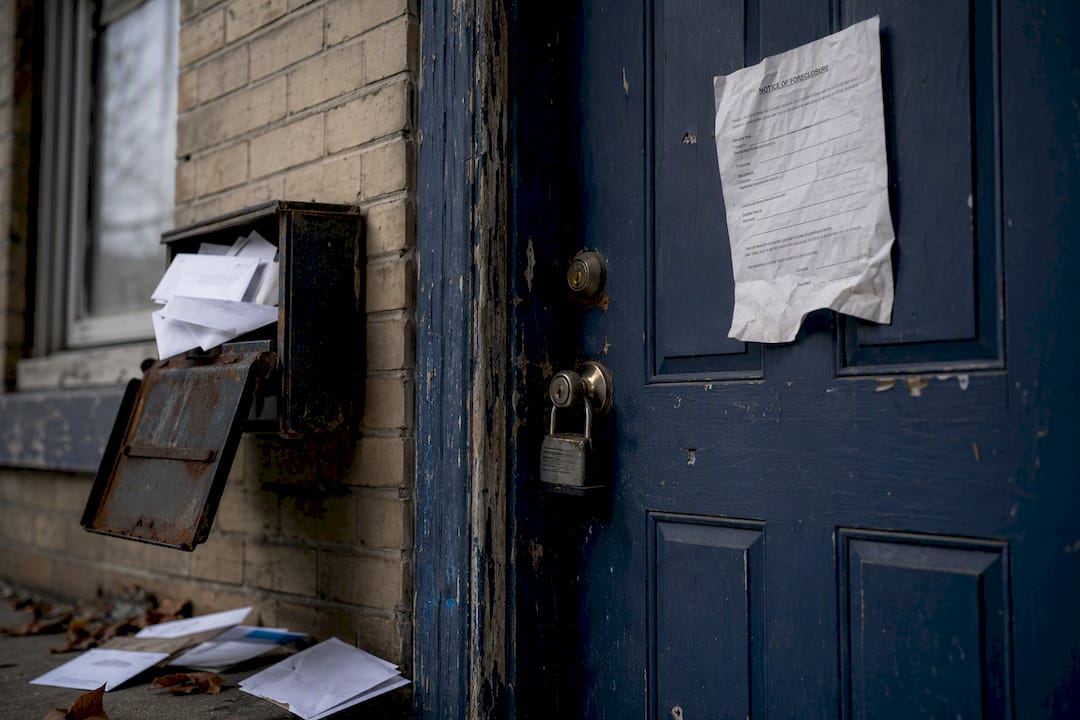
None of this happens randomly. Investigations show that scammers mine public records for foreclosure filings, probate notices, and tax delinquencies, then target the homeowners most likely to feel desperate, including elderly sellers, according to ProPublica’s reporting on cash-for-home solicitations.
Red Flags to Watch for in Offers and Contracts
Before you take any cash offer seriously, screen it against the same checklist real estate attorneys and consumer advocates use. A legitimate buyer will not flinch at these questions. A wholesaler or scammer usually will.
- No proof of funds, or a bank statement that’s vague, outdated, or impossible to verify.
- Earnest money that’s suspiciously small (a token $10 or $100) or never deposited with a neutral title company.
- Contract language naming “[Buyer] and/or assigns” instead of one specific, accountable buyer.
- No expiration date on the contract, or contingencies that stretch on with no real deadline.
- High-pressure closing tactics: refusing a neutral escrow company, pushing you to sign alone, or rushing you past questions.
Missing proof of funds, minimal earnest money, assignment clauses, and open-ended timelines are the most reliable signals that you’re dealing with someone selling your contract rather than buying your house. Our own breakdown of red flags to spot in We Buy Houses offers walks through each of these in more detail.
Pro Tip: Ask directly, “Who is the buyer of record, and will you remove the ‘and/or assigns’ language?” A real buyer answers without hesitation. A wholesaler usually stalls or changes the subject.
How to Verify a Cash Buyer Before You Sign Anything
Verification isn’t complicated, but it does take a few phone calls most sellers skip. Do them anyway.
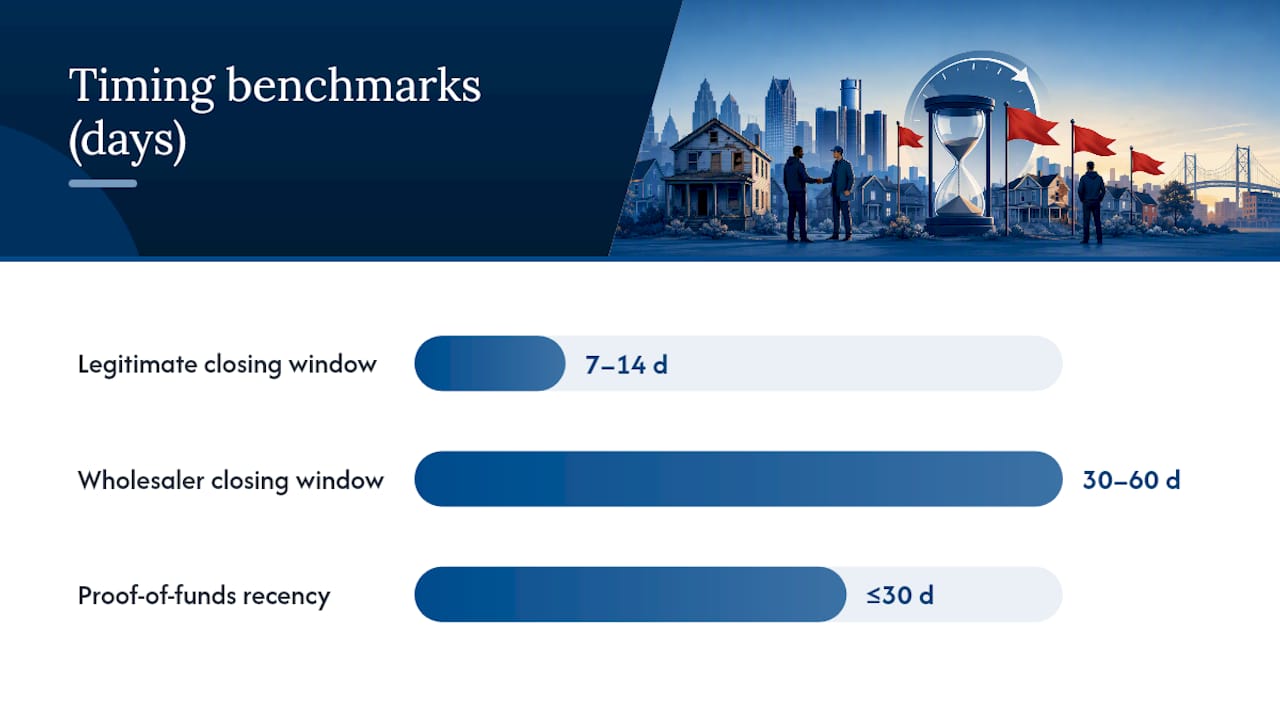
- Request proof of funds dated within 30 days. It should name the buyer and show liquid, verifiable funds, not a screenshot with no bank letterhead.
- Confirm the earnest money deposit. Ask how much, who’s holding it, and whether it’s going into a neutral title or escrow account rather than the buyer’s pocket.
- Read the contract for the buyer’s actual name. Strike any “and/or assigns” clause and confirm there’s a firm expiration date.
- Require a neutral title company and independent attorney review. A buyer who resists either one is telling you something.
- Check the buyer’s standing. Search your state attorney general’s office, your state real estate commission, the Better Business Bureau, and the FBI’s Internet Crime Complaint Center for complaints, and ask for references from recent sellers.
Legitimate cash buyers typically bring recent proof of funds, meaningful earnest money, and a closing window of roughly seven to fourteen days. Wholesalers tend to stretch that timeline toward 30 to 60 days because they’re still shopping your contract to someone else, a pattern noted in guidance on how to know if a cash buyer is legitimate.
Pro Tip: Call the title company listed in the contract directly, using a number you find independently, not one the buyer gives you. Confirm they’re actually handling the earnest money before you sign.
If You’re Contacted or Think You’ve Already Been Scammed
What you do in the first 24 hours matters more than almost anything that follows.
- If you’ve only been contacted: Stop responding to high-pressure calls or texts. Document every message, add your number to the National Do Not Call Registry, and forward spam texts to 7726.
- If you haven’t signed yet: Refuse to sign anything until an attorney has reviewed the contract. Insist on a neutral closing.
- If you already signed: Contact a real estate attorney immediately. Notify your mortgage lender and check your county’s property records to confirm no improper title transfer occurred.
- Preserve every piece of evidence: contracts, screenshots, call logs, and names of anyone involved. Attorneys and regulators both need this to act.
Our guide to paperwork for a direct cash home sale covers exactly what a legitimate purchase agreement should include, which makes it easier to spot when something’s missing.
Where to Report a Suspected “We Buy Houses” Scam
Reporting does more than vent frustration. It builds the paper trail that turns isolated complaints into investigations.
- Your state attorney general’s consumer protection office accepts detailed complaints and often publishes a specific form for real estate fraud.
- The FBI’s Internet Crime Complaint Center (IC3) handles solicitations that arrived by phone, text, or online, and feeds patterns into national fraud tracking.
- HUD’s Office of Inspector General takes reports tied to housing-related fraud, including schemes involving mortgage payoff promises.
- Your state real estate commission when the person soliciting you claimed a license they don’t hold or misrepresented their role in the deal.
Filing with more than one agency isn’t redundant. State offices handle local enforcement, while IC3 tracks internet-enabled schemes across state lines, which is often how repeat offenders eventually get identified.
Why a Vetted Cash Buyer Can Still Be the Right Choice
A cash sale genuinely makes sense in foreclosure, probate, or any situation where time matters more than squeezing out the last dollar of market value. The difference between a smart decision and a costly mistake comes down to who you’re selling to.
Sell Dave Your House has worked with Metro Detroit homeowners for more than 16 years, providing fair cash offers within 24 hours and closing in as little as seven days. Homes are purchased as-is, with standard closing costs covered by the buyer. Every transaction runs through a neutral title company, and sellers are encouraged to have an independent attorney review the contract before signing, the same protections consumer advocates recommend throughout this guide.
A Note From Our Team on Protecting Vulnerable Sellers
We know the stress behind most of these calls. Whether it’s foreclosure, a parent’s estate, or a house that’s become too much to manage, the pressure to just make the offer go away is real, and that’s exactly what predatory wholesalers count on.
Before you sign anything, run through the basics: verified proof of funds, real earnest money in escrow, a contract naming an actual buyer, and a firm closing date. If you’re helping an elderly parent or a family member going through probate, don’t let them face this alone. Loop in a trusted attorney or a relative before any paperwork gets signed.
— Real Estate Team
How Sell Dave Your House Handles a Cash Offer, Start to Finish
Sell Dave Your House is the alternative to guesswork and unverified wholesalers for Metro Detroit homeowners who want a cash sale without the risk this article just walked through. You get a fair, no-obligation offer within 24 hours, the option to close in as little as seven days, and no repairs, cleaning, or realtor commissions to worry about.

Every offer comes with the same safeguards you should demand from anyone: a neutral title company handling the transaction and an open invitation to have your own attorney review the contract before you sign. That’s the difference between a homeowner protecting their equity and one hoping a stranger’s promise holds up. If you’re facing foreclosure, sorting out an inherited property, or just ready to sell without the hassle, request a fair cash offer and see the terms in writing before you commit to anything.
This article is general information, not a substitute for advice from a qualified financial advisor. Consult a qualified financial professional about your own circumstances before acting on anything here.
Sources
- Want to Sell Your Home for Cash? Read This First — ProPublica
- Beware of ‘Let Us Buy Your Home’ Ads — AARP
- “We Buy Homes” Scams — North Carolina Department of Justice
- FBI Internet Crime Complaint Center (IC3)
- Do Not Call Registry — Federal Trade Commission
FAQ
Is “We Buy Houses” a Scam?
Not inherently. Most solicitations come from real investors, but predatory wholesalers and outright fraud are common enough that every offer needs verification before you sign, according to warnings from AARP.
What’s the Best Way to Choose a Cash Home Buyer?
Look for a buyer who provides proof of funds, uses a neutral title company, welcomes independent attorney review, and offers a closing timeline of seven to fourteen days rather than an open-ended one.
Is Selling Your House for Cash a Good Idea?
It can be a smart move if you’re facing foreclosure, an inherited property, or a tight timeline, as long as the buyer passes the same verification steps outlined in this guide.
What Are the Risks of a Cash Offer on a House?
The main risks are unverified buyers who never intend to close, contracts with assignment clauses that hand your deal to a stranger, and earnest money that never reaches a neutral escrow account.
How Do I Know If a “We Buy Houses” Company Is Legitimate?
Check proof of funds, confirm earnest money sits with a title company, read the contract for a named buyer with no assignment clause, and search your state attorney general’s office and the BBB for complaints.